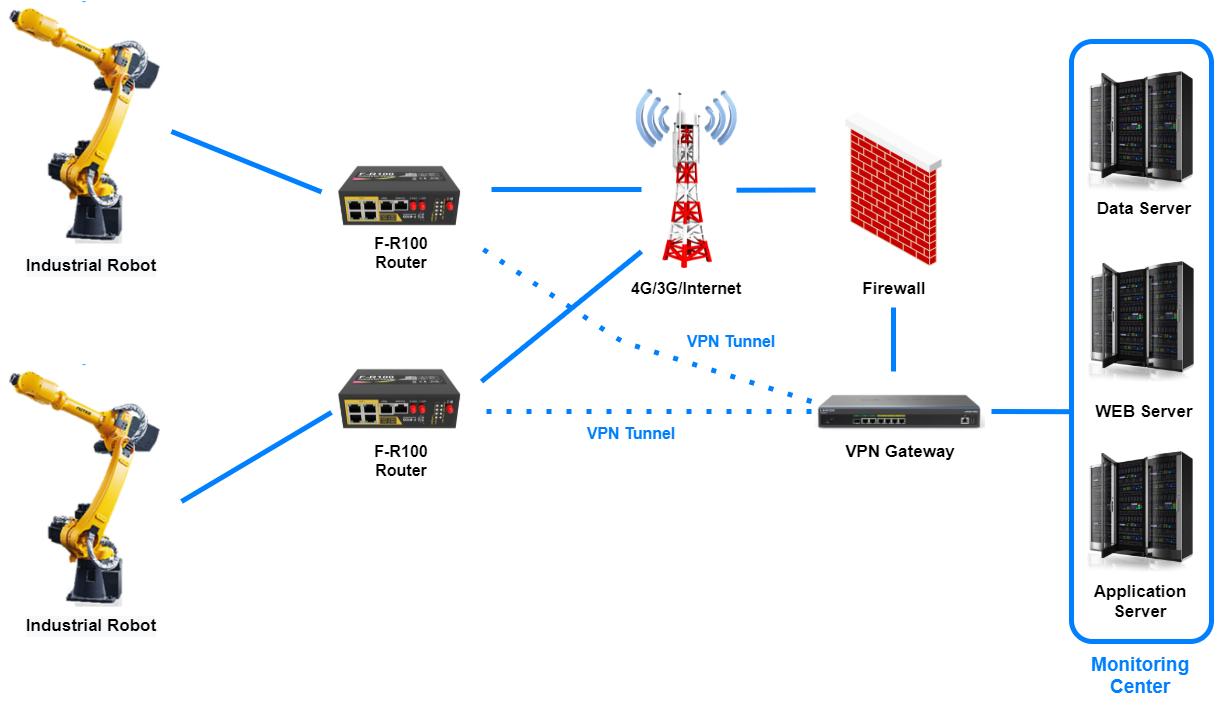
Remote Robot Monitoring (RRM) refers to the real-time observation, diagnostics, and management of robotic systems (physical or virtual) over a network. These robots may range from industrial robots, RPA (Robotic Process Automation) bots, autonomous systems, or even cloud-deployed AI bots.
History or Background
Industrial robotics began integrating with networked systems in the 2000s.
With the rise of RPA and autonomous systems, DevOps tools extended their capabilities to robotic fleet management.
Recent evolution focuses on real-time telemetry, predictive diagnostics, and anomaly detection, aligned with DevSecOps principles for secure deployment and operations.
Why is it Relevant in DevSecOps?
Security: Robots often run in critical systems (factories, health, defense). RRM enforces security policies and detects anomalies.
Compliance: Ensures robot operations follow SOPs, ISO standards.
Automation: Enables CI/CD of robot firmware, configurations, and AI models.
Incident response: Enables automated rollback, alerts, or shutdowns.
2. Core Concepts & Terminology
Key Terms and Definitions
Term
Definition
Robot Telemetry
Real-time data from sensors, actuators, logs, etc.
Digital Twin
A virtual replica of the robot used for simulations.
Edge Device
A gateway device connected to robots for processing.
Heartbeat Monitoring
Health-check ping to verify the robot’s availability.
OTA (Over-the-Air) Updates
Remotely delivering firmware or configuration changes.
How It Fits into the DevSecOps Lifecycle
DevSecOps Phase
RRM Involvement
Plan
Define monitoring and compliance rules.
Develop
Integrate robot SDKs, logging frameworks.
Build
Containerize robot simulators or firmware logic.
Test
Simulate failures and test observability.
Release
Deploy robot logic with monitoring hooks.
Operate
Monitor robot performance and alerts in real time.
# Step 1: Set up edge monitoring agent on robot
sudo apt install rosbridge-server
roslaunch rosbridge_server rosbridge_websocket.launch

# Step 2: Configure telemetry to push to a central server
export MONITOR_URL=https://monitoring.example.com
python3 telemetry_pusher.py --url $MONITOR_URL

# Step 3: Setup Prometheus to scrape telemetry
# prometheus.yml
scrape_configs:
  - job_name: 'robot_telemetry'
    static_configs:
      - targets: ['edge-agent-ip:9090']

# Step 4: Visualize in Grafana
# Import Prometheus dashboard template
5. Real-World Use Cases
1. Manufacturing Plant Monitoring
100+ robotic arms monitored via edge gateways.
Downtime prediction using historical vibration logs.
2. Warehouse Robotics (Amazon Kiva-style)
Real-time load distribution & alert on traffic congestion.
OTA path optimization via DevOps pipeline.
3. Healthcare Robots
Patient-assisting robots monitored for battery, position, emergency triggers.
Integrated with HIPAA-compliant alerting.
4. Autonomous Drone Fleets
Live telemetry feed monitored for altitude, signal strength.
CI/CD updates to navigation algorithm via GitOps.
6. Benefits & Limitations
✅ Key Advantages
Real-time visibility into remote operations.
Fast incident response through automated alerts.
Regulatory compliance and audit trails.
Centralized control of distributed systems.
❌ Limitations
High bandwidth consumption with video-based telemetry.
Latency in remote areas can delay reactions.
Security risks if not encrypted properly (e.g., robot hijack).
Complex setup if working with diverse robot ecosystems.
7. Best Practices & Recommendations
🔐 Security
Enforce TLS/SSL for all robot-cloud communications.
Use mutual authentication for edge agents.
Regular firmware scanning with DevSecOps tools (e.g., Anchore).
⚙️ Performance
Offload heavy processing to edge gateways.
Use event-based triggers instead of frequent polling.
🧾 Compliance & Automation
Log every robot action with timestamp and metadata.
Use Terraform or Ansible for infrastructure as code (IaC).
Automate alerting workflows with Slack, PagerDuty, or SIEM.
8. Comparison with Alternatives
Feature
Remote Robot Monitoring
RPA Monitoring
Industrial SCADA
APM (App Perf Monitoring)
Real-Time Hardware Telemetry
✅
❌
✅
❌
Cloud-Integrated
✅
✅
⚠️ (legacy)
✅
Security Focus (DevSecOps)
✅
⚠️
⚠️
✅
OTA Support
✅
⚠️
❌
❌
Cost
Medium
Low
High
Medium
When to Choose RRM?
You’re dealing with physical or embedded robotics.
You need real-time anomaly detection and secure telemetry.
You’re integrating with CI/CD pipelines or cloud-native systems.
9. Conclusion
Final Thoughts
Remote Robot Monitoring is an essential part of the modern DevSecOps toolkit when working with intelligent, autonomous, or industrial robotic systems. With the proper architecture, tooling, and security protocols, organizations can scale robotic operations while maintaining resilience, performance, and compliance.
Modern digital markets move fast, and businesses in Japan must release software quickly to remain competitive. However, many enterprise leaders face severe tech skill shortages within their…
Introduction Nobody prepares you for how overwhelming fertility research can feel. One day you’re hopeful. The next, you’re drowning in unfamiliar terms and mismatched numbers. Every source…
Hyderabad never sits still. The city buzzes with new cafes, live shows, and weekend fun. But this fast pace makes planning tricky. You blink, and a great…
Introduction Programming a robot feels a lot like giving directions to a helpful friend. You write down clear steps, and the machine follows them one by one….