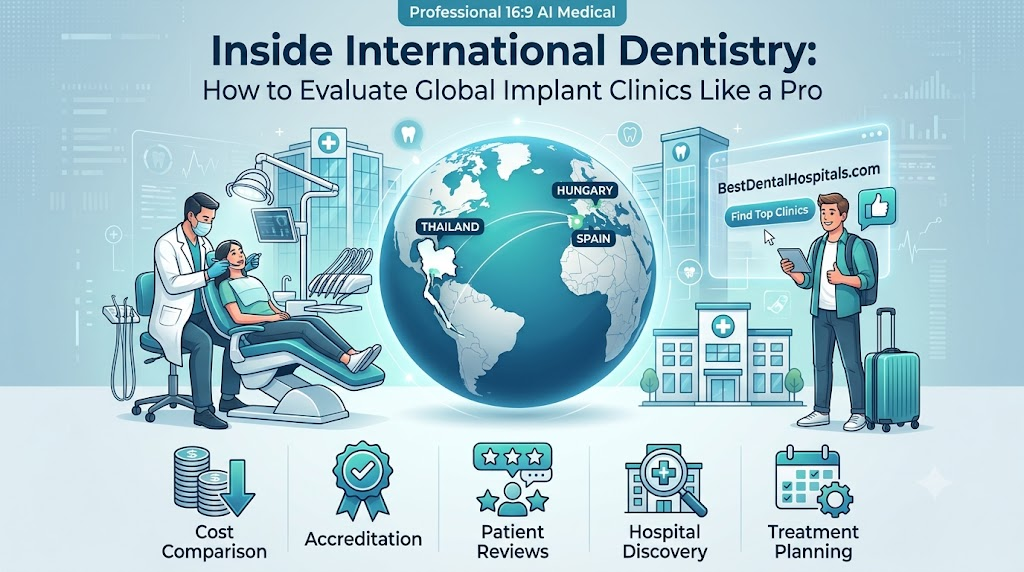
When facing complex dental procedures—such as full-arch reconstructions, multiple tooth replacements, or extensive bone augmentation—patients quickly realize that navigating clinical care requires clear strategies. Rising healthcare expenses and restricted dental coverage at home have shifted how people view their treatment pathways. Today, tens of thousands of individuals evaluate international options not out of necessity, but as an active strategy to access high-caliber specialist care. Platforms like BestDentalHospitals transform this journey by offering an independent research and comparison hub. By evaluating hospital accreditations, verifying specialist credentials, comparing transparent quotes, and analyzing international patient services, such platforms empower you to act as an informed advocate for your own health.
The Landscape of Global Dental Restorations
Modern restorative dentistry combines surgical precision, bio-compatible materials, and digital manufacturing. Before evaluating overseas providers, it helps to understand the primary procedures available and where each applies clinically.
                  ┌────────────────────────────────────────┐
                  │   Modern Restorative Dental Pathways   │
                  └───────────────────┬────────────────────┘
                                      │
         ┌────────────────────────────┼────────────────────────────┐
         │                            │                            │
┌────────▼────────┐          ┌────────▼────────┐          ┌────────▼────────┐
│ Single Implants │          │ Multi-Unit/Bridge│          │ Full-Arch Systems│
│ Post + Abutment │          │ Fixed Anchors   │          │ All-on-4 / 6    │
└─────────────────┘          └─────────────────┘          └─────────────────┘
- Single-Tooth Replacements: Standard biocompatible titanium or zirconia implant posts placed into the jawbone, topped with custom abutments and ceramic crowns.
- Segmental Implant Bridges: Multi-unit bridges anchored by two or more implants, replacing multiple consecutive missing teeth without altering surrounding natural teeth.
- Full-Arch Implant Rehabilitation (All-on-4 / All-on-6): Complete arch replacement systems utilizing strategically angled implants to maximize available bone structure and support fixed prosthetics.
- Comprehensive Aesthetic Restorations: Porcelain veneers and full-coverage crowns designed to correct severe tooth wear, structural damage, or alignment issues.
Why Strategic Patients Choose Global Healthcare Options
Evaluating international care requires looking closely at why global dental centers have become competitive hubs for complex treatment.
                   ┌──────────────────────────────────────┐
                   │    Strategic Drivers of Global Care  │
                   └──────────────────┬───────────────────┘
                                      │
    ┌──────────────────┬──────────────┴──────────────┬──────────────────┐
    │                  │                             │                  │
┌───▼───────────┐  ┌───▼───────────┐          ┌──────▼───────────┐  ┌───▼───────────┐
│ Value Focus   │  │ Direct Access │          │ Integrated Hubs  │  │ Modern Tech   │
│ (Operational) │  │ (Zero Delays) │          │ (All Specialists)│  │ (3D Scans)    │
└───────────────┘  └───────────────┘          └──────────────────┘  └───────────────┘
1. Operational Efficiency and Value
International dental facilities often operate in markets with lower operational costs, lower liability overhead, and streamlined administrative systems. These savings allow top clinics to offer high-grade materials and surgical expertise at substantially reduced fees compared to domestic rates, without compromising on quality.
2. Streamlined Care Timelines
Unlike traditional care models that require multiple appointments stretched across several months, accredited international patient departments offer compressed, coordinated schedules. Complex multi-stage procedures are structured efficiently to match your travel itinerary.
3. Integrated Specialist Facilities
Leading global centers often bring together multidisciplinary teams under one roof. Having prosthodontists, periodontists, oral surgeons, and in-house laboratory technicians collaborating in real time reduces communication gaps and ensures cohesive treatment execution.
4. Advanced Digital Workflows
International surgical centers frequently feature cutting-edge technologies, including 3D Cone Beam Computed Tomography (CBCT), dynamic surgical navigation, guided implant software, and CAD/CAM milling units to ensure high precision.
Comparing Restorative Treatment Options
Choosing the right clinical approach depends on your specific oral anatomy, bone density, and long-term goals.
Comprehensive Treatment Matrix
| Clinical Option | Target Patient Profile | Structural Advantages | Strategic Considerations |
| Single Dental Implant | Isolated tooth loss with healthy adjacent bone. | Preserves adjacent natural teeth; prevents localized jawbone loss. | Requires a standard healing phase (3–6 months) before final capping. |
| Implant-Supported Bridge | Consecutive missing teeth in a single quadrant. | Sturdy anchor setup; avoids sacrificing healthy natural teeth. | Requires sufficient bone density across multiple anchor points. |
| All-on-4 / All-on-6 Arch | Complete tooth loss or severe terminal dentition. | Provides fixed, non-removable teeth; minimizes the need for bone grafts. | Demands meticulous oral hygiene and structured professional maintenance. |
| Removable Overdentures | Full-mouth restoration on a lower budget. | Lower initial investment; easier to clean outside the mouth. | Offers less bite force than fixed options and allows gradual bone resorption over time. |
A Professional Evaluation Framework for Overseas Clinics
Evaluating an overseas clinic requires asking the right questions. The following framework helps you look past polished marketing and assess a facility’s true capabilities.
       Phase 1: Verify Institutional Accreditations (JCI, ISO, Local Boards)
                                   │
       Phase 2: Audit Surgeon Sub-Specialties & Board Credentials
                                   │
       Phase 3: Inspect Diagnostic Systems (3D CBCT & Digital Guided Surgery)
                                   │
       Phase 4: Review Sterilization Standards & Infection Control Protocols
                                   │
       Phase 5: Establish Remote & In-Person Aftercare Networks
Institutional Accreditation
Look for facilities certified by independent healthcare accrediting bodies such as Joint Commission International (JCI), ISO quality systems, or recognized national health authority accreditations. These standards confirm strict adherence to surgical hygiene, emergency readiness, and patient safety protocols.
Practitioner Specialization and Board Certification
Ensure your procedure is handled by a credentialed specialist:
- Oral & Maxillofacial Surgeons: Focused on surgical extractions, bone grafting, sinus lifts, and complex implant placement.
- Prosthodontists: Focused on designing, balancing, and placing complex prosthetics and full-arch restorations.
- Periodontists: Specialized in maintaining healthy gum tissue and supporting bone structures.
Diagnostic Capabilities
A top-tier facility must use 3D CBCT scanning. Two-dimensional panoramic X-rays do not provide the detailed bone depth, density, and nerve mapping needed for safe, accurate implant surgery.
Proven Materials and Global Warranties
Verify that the facility uses tier-one implant hardware (such as Straumann, Nobel Biocare, or Astra Tech). Standardized hardware ensures that local dentists in your home country can easily access compatible components for routine care or future adjustments.
Surgical Approaches: All-on-4 vs. Full-Mouth Restoration
When restoring an entire arch, evaluating the differences between targeted All-on-4 protocols and traditional multi-implant approaches helps you make an informed choice with your surgical team.
All-on-4 vs. Traditional Multi-Implant Reconstruction
| Evaluation Criteria | All-on-4 Protocol | Multi-Implant Approach (6–8 Implants) |
| Hardware Used | 4 strategically placed implants per arch. | 6 to 8 implants per arch. |
| Anatomical Adaptation | Angled posterior implants utilize existing bone, often eliminating the need for grafting. | Requires higher baseline bone volume or preparatory bone grafting. |
| Prosthetic Loading | Frequently supports immediate provisional bridge placement. | May require traditional healing periods before placing provisional teeth. |
| Force Distribution | Spreads biting force across 4 key points. | Spreads load across 6 to 8 points, offering higher redundancy. |
| Bone Density Need | Suitable for patients with mild to moderate bone loss. | Best for patients with preserved jawbone structure. |
Financial Analysis and Cost Realities
Understanding how dental treatment pricing works helps you evaluate international estimates realistically without running into unexpected costs.
Key Factors Influencing Overall Expenses
- Surgical Adjustments: Auxiliary procedures like sinus floor elevations, ridge augmentations, or tooth extractions add to the base surgical cost.
- Restorative Materials: The choice between acrylic, metal-composite, or solid zirconia prosthetics directly impacts overall pricing and durability.
- Sedation and Anesthesia: Options range from local anesthesia to conscious IV sedation managed by certified anesthesiologists.
- Diagnostic Preparation: Surgical templates, 3D imaging, digital smile design, and provisional restorations form key parts of the initial phase.
Global Cost Comparison Overview (Estimated Industry Ranges)
The estimates below reflect realistic average costs across major international markets. These figures serve as general reference points rather than fixed quotes.
| Region / Country | Single Implant (Post, Abutment & Crown) | All-on-4 Full Arch (Surgical & Provisional Phase) |
| United States / Canada | $3,000 – $6,000 USD | $18,000 – $35,000 USD |
| United Kingdom / Western Europe | £2,000 – £4,000 GBP | £12,000 – £22,000 GBP |
| Mexico | $600 – $1,800 USD | $8,000 – $15,000 USD |
| Turkey | $500 – $1,400 USD | $6,000 – $12,000 USD |
| Thailand | $700 – $1,700 USD | $8,000 – $14,000 USD |
| India | $500 – $1,200 USD | $5,000 – $10,000 USD |
Note: Cost ranges reflect broad market averages. Final investments depend on individual diagnostic findings, requiring direct consultation and a written clinical quote.
Step-by-Step International Patient Journey
Planning medical travel requires a methodical approach from initial inquiry to long-term aftercare.
  Phase 1: Initial Digital Diagnostic & Record Review
                         │
  Phase 2: Formal Itemized Plan & Clinical Quotation
                         │
  Phase 3: Travel, Local Logistics & Facility Arrival
                         │
  Phase 4: In-Person Scan Verification & Surgical Stage
                         │
  Phase 5: Osseointegration Period (3–6 Months)
                         │
  Phase 6: Final Fitting & Home-Country Aftercare Coordination
Phase 1: Remote Diagnostic Assessment
Submit current 3D CBCT scans and digital records through secure channels to the international team at BestDentalHospitals. Surgical specialists evaluate your bone structure and overall health to build a preliminary plan.
Phase 2: Itemized Proposal Review
Receive a comprehensive proposal breaking down costs for extractions, grafting, hardware, lab fees, provisional prosthetics, and follow-up visits.
Phase 3: Logistics and Arrival
Coordinate your travel itinerary. Most accredited partner facilities assist with airport transfers, local transportation, multi-lingual patient coordinators, and nearby hotel accommodations.
Phase 4: Clinical Consultation and Surgery
Undergo an in-person clinical exam and updated CBCT imaging to finalize the treatment plan. Implants are surgically placed, and provisional restorations are fitted when appropriate.
Phase 5: Osseointegration and Permanent Fitting
Allow 3 to 6 months for the jawbone to naturally fuse with the implant posts. Once healing is complete, you return to the clinic for final impressions and placement of your custom zirconia or ceramic prosthetic.
Strategic Advantages and Risk Management
Navigating healthcare abroad involves balancing significant clinical advantages against potential travel and recovery challenges.
Balancing Advantages and Risk Factors
| Strategic Advantages | Operational Realities & Risks |
| Exceptional Cost Value: Unlocks access to top-tier care at lower out-of-pocket costs. | Travel Logistics: Managing flights, time zone changes, and transit during recovery. |
| World-Class Facilities: Access to clinics equipped with modern digital labs and 3D imaging. | Follow-up Distance: Minor adjustments or long-term checks require local coordination. |
| Multi-Specialty Care: Integrated teams handling surgery, restoration, and hygiene together. | Communication Gaps: Demands verification that the facility offers fluent English-speaking care teams. |
| Patient Support Services: Dedicated coordinators managing scheduling, travel, and translation. | Fixed Timelines: Requires ensuring surgical healing is given proper time without rushing travel. |
Expert Tips for Evaluating International Providers
- Focus on Comprehensive Proposals: Evaluate treatment plans based on included services—such as diagnostic scans, bone grafting, high-grade hardware, and provisional teeth—rather than comparing baseline price tags alone.
- Verify Hardware Compatibility: Ensure the clinic uses major global implant brands so local dentists in your home country can easily source compatible parts for future maintenance.
- Request Written Warranty Terms: Ask for clear documentation explaining warranty terms for hardware and prosthetics, including how adjustments or revisions are managed.
- Confirm Communication Protocols: Ensure you will have direct access to a dedicated, fluent English-speaking coordinator throughout your care journey.
- Maintain Complete Records: Secure digital copies of your diagnostic scans, surgical blueprints, implant batch details, and prosthetic specifications before flying home.
Best Practices for Patient Safety and Smooth Recovery
- Start with a Local Evaluation: Visit a local dentist for an initial exam and 3D scan to establish a clear baseline before seeking international proposals.
- Plan Generous Travel Windows: Avoid booking tight return flights. Give yourself several extra days in the destination city for post-operative checks and comfortable healing.
- Secure Medical Travel Coverage: Obtain specialized travel insurance that covers unexpected itinerary adjustments or medical travel delays.
- Follow Post-Surgical Instructions: Protect your investment by strictly following all dietary restrictions, anti-bacterial rinses, and oral hygiene guidelines provided by your surgical team.
- Establish Local Aftercare Support: Connect with a supportive local dentist who agrees to handle routine cleanings, periodic evaluations, and ongoing maintenance after you return home.
Common Planning Mistakes to Avoid
- Choosing Based Solely on the Lowest Price: Selecting a clinic based purely on low cost can risk sub-optimal surgical planning, improper hardware choice, or lower treatment standards.
- Rushing the Healing Phase: Attempting to combine surgical placement and final fitting into a single short trip can compromise bone integration and overall success.
- Underestimating Total Travel Costs: Forgetting to factor flights, lodging, meals, ground travel, and time off work into your overall healthcare budget.
- Skipping Hardware Verification: Failing to confirm the exact implant brand, post material, or crown composition prior to surgery.
- Ignoring Long-Term Maintenance: Proceeding with treatment without establishing how you will handle routine maintenance and hygiene checkups at home.
Emerging Innovations in Global Dental Care
The international dental space continues to evolve with advanced clinical technologies that enhance safety, speed up delivery, and improve treatment outcomes:
- AI-Guided Diagnostics: Artificial intelligence platforms analyze 3D CBCT scans to pinpoint optimal implant positions, assess bone density, and map nerve pathways with exceptional accuracy.
- In-House CAD/CAM Milling: Advanced digital laboratory technology enables real-time fabrication of high-precision zirconia restorations, drastically reducing lab turnarounds.
- Tele-Dentistry Support: Remote consultation and monitoring tools allow overseas surgical teams to track your healing progress and guide recovery long after you return home.
- Unified Discovery Networks: Research hubs like BestDentalHospitals make it easier to compare accredited clinics, review verified specialist credentials, and evaluate transparent pricing models worldwide.
Why Use BestDentalHospitals for Your Research
Navigating international healthcare requires reliable information, clear cost comparisons, and verified provider details. Using an independent discovery platform streamlines your research and helps you make confident decisions.
BestDentalHospitals empowers your search by offering:
- Accredited Network Access: Browse vetted profiles of international dental hospitals, surgical centers, and cosmetic institutions.
- Verified Specialist Profiles: Review surgeon credentials, board certifications, sub-specialty focus, and clinical experience.
- Transparent Price Estimates: Request itemized quotes to evaluate real expenses without hidden fees.
- International Support Services: Connect directly with patient care teams skilled in coordinating multi-lingual support, appointments, and travel logistics.
Frequently Asked Questions (FAQs)
1. What defines a top-tier international dental hospital?
Top international dental facilities hold independent accreditations (such as JCI or ISO), employ board-certified specialists, feature advanced 3D CBCT imaging, and maintain dedicated international patient departments.
2. How safe is it to travel abroad for advanced dental surgery?
Traveling abroad for dental surgery is safe when you choose fully accredited, credentialed facilities. Verifying hospital certifications, surgeon credentials, sterilization protocols, and patient feedback ensures high safety standards.
3. How should I compare clinics across different countries?
Evaluate clinics based on surgeon qualifications, institutional accreditations, digital diagnostic equipment (like 3D CBCT and CAD/CAM labs), transparent itemized pricing, and formal aftercare support.
4. What qualifications matter most when choosing an implant surgeon?
Look for board-certified oral surgeons, implantologists, or prosthodontists with specialized postgraduate surgical training, active memberships in recognized dental associations, and extensive experience in full-arch procedures.
5. Why do dental implant costs vary so much internationally?
Cost differences stem primarily from variations in local operational expenses, facility overhead, living costs, and liability insurance, rather than compromises in hardware quality or surgical care.
6. How does the All-on-4 surgical technique work?
The All-on-4 approach anchors a full arch of permanent teeth using four strategically angled titanium implants. This layout maximizes support from existing jawbone and often bypasses the need for bone grafting.
7. What is the typical timeframe for getting implants abroad?
Full-mouth treatment generally involves two visits. The first trip (7–10 days) covers extractions, implant placement, and provisional teeth. The second trip (7–10 days), following a 3-to-6-month healing period, focuses on fitting permanent prosthetics.
8. What details should a formal dental quote include?
A complete quote should itemize diagnostic 3D scans, surgeon fees, extractions, bone grafting, implant hardware, abutments, provisional teeth, final prosthetics, anesthesia, and follow-up checkups.
9. How do I arrange aftercare once I return home?
Partner with a local dentist in your home town for routine cleanings and checkups, and choose an overseas clinic that provides full digital treatment records, hardware serial numbers, and surgical notes for your local doctor.
10. Do international dental hospitals offer warranties on implants?
Yes, many accredited facilities offer written warranties on implant posts and final restorations. Always review the specific terms, conditions, and maintenance requirements in writing prior to treatment.
11. What are the key differences between titanium and zirconia implants?
Titanium implants are the long-standing industry standard known for high strength and excellent bone fusion. Zirconia implants are tooth-colored, metal-free ceramic alternatives often chosen by patients with metal sensitivities or thin gums.
12. Can patients with low bone density still get dental implants?
Yes. Patients with reduced bone volume can often receive implants through bone grafting, sinus elevation, or specialized approaches like All-on-4, which optimize available bone angles.
13. Is a virtual consultation necessary before traveling?
While not mandatory, a virtual consultation is highly recommended. Sharing your 3D CBCT scans ahead of time allows specialists to provide a preliminary treatment plan, timeline, and cost estimate before you book flights.
14. What steps are taken if an implant fails to integrate?
If an implant fails to integrate during initial healing, the surgeon removes it, cleans the site, allows it to heal (often placing a minor bone graft), and re-places the implant. Confirm your clinic’s warranty coverage for integration failures.
15. How do I pick the right destination country for dental care?
Choose a destination based on travel convenience, estimated savings, hospital accreditation standards, specialist expertise, language support, and overall travel preferences.
Conclusion
Taking charge of your dental health requires balancing clinical quality, surgeon expertise, clear pricing, and long-term aftercare planning. While traveling abroad offers an accessible way to afford complex full-mouth restorations, cosmetic makeovers, or advanced implant work, achieving successful outcomes relies on careful research and proper preparation.
Always prioritize accredited facilities, board-certified specialists, and globally compatible implant hardware over low prices alone. Remember that educational resources and online guides serve as valuable research tools, but they do not replace an in-person clinical exam, digital 3D imaging, and a tailored diagnosis from a qualified dental professional.
