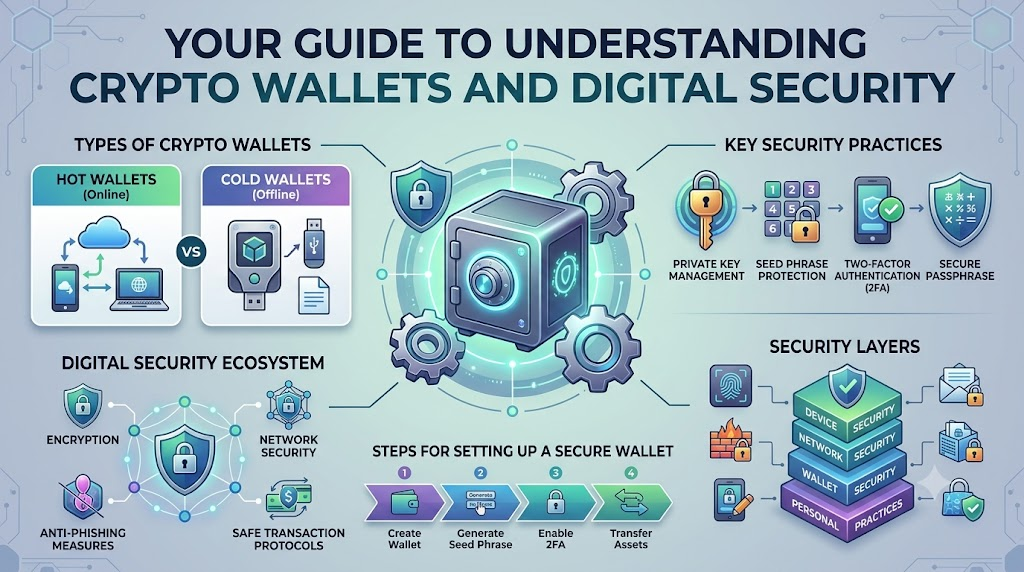
Navigating the world of digital assets can feel overwhelming when you first encounter unfamiliar terminology and technical hurdles. Many beginners struggle to understand where their digital currency actually lives and how to keep it secure against online threats. This foundational knowledge matters because digital ownership relies entirely on personal responsibility rather than traditional banking safeguards. Throughout this article, you will learn what a crypto wallet is, how it functions behind the scenes, and why proper security practices are essential for every digital asset participant. By exploring these core concepts, you will build a solid understanding of how to interact safely with blockchain networks and platforms like CryptoBlockCoins.
What Is a Crypto Wallet?
A crypto wallet is a digital tool that allows users to interact with various blockchain networks. Despite what the name suggests, a wallet does not actually store physical coins or physical cash. Instead, it securely stores your cryptographic keys, which grant you access to your digital assets on the blockchain.
The main purpose of a crypto wallet is to let you send, receive, and monitor your digital currency holdings safely. It acts as your personal interface to the decentralized web. Anyone exploring cryptocurrency for beginners must understand that blockchain data lives permanently on a distributed ledger, while your wallet simply holds the keys that prove ownership of specific entries on that ledger.
Understanding this distinction helps clarify why security is so important. If you lose your keys, you lose access to your funds. Therefore, everyday users, traders, and participants in decentralized finance need to grasp how these tools operate before engaging with any cryptocurrency exchange or blockchain network.
How Does a Crypto Wallet Work?
Understanding how a wallet operates requires looking at the underlying cryptography that secures modern blockchain technology. Every wallet relies on a pair of cryptographic keys: a public key and a private key.
- Generation of Keys: When you set up a new wallet, the software generates a public key, which functions similarly to a bank account number or email address that you can safely share to receive funds.
- Creation of Private Keys: The wallet simultaneously generates a private key, which acts as your digital signature and secret password. Anyone who knows your private key controls the assets associated with it.
- Signing Transactions: When you initiate a transaction to send digital currency, your wallet uses your private key to mathematically sign the transaction, proving to the network that you authorize the transfer.
- Broadcasting to the Network: The signed transaction is broadcast to the broader blockchain network, where validators or miners verify its validity.
- Ledger Update: Once verified, the transaction is recorded permanently on the blockchain, and your wallet interface updates to reflect the new balance.
This seamless process connects your personal device with complex networks supporting Bitcoin for beginners, the Ethereum blockchain, and various Web3 applications without requiring a centralized middleman.
Key Components of a Crypto Wallet
Blockchain Network Integration
A wallet must be compatible with the specific blockchain network where your assets reside. For instance, interacting with tokens on the Ethereum blockchain requires a wallet that supports Ethereum smart contracts, whereas Bitcoin requires a network-compatible address structure.
Public and Private Keys
The public key derives your receiving address, while the private key authorizes spending. Keeping the private key secret is the single most important rule of digital asset management.
Seed Phrases
Most modern wallets generate a recovery seed phrase—typically a sequence of twelve to twenty-four random words. This phrase serves as a master backup that can restore your private keys if your device is lost or damaged.
Real-World Examples
To visualize how these concepts apply in daily life, consider a few practical scenarios. Imagine you want to purchase digital tokens using a cryptocurrency exchange. After buying the assets on the exchange platform, you decide to transfer them to a personal wallet for long-term safekeeping. You copy your wallet’s public receiving address, paste it into the exchange withdrawal form, and confirm the transaction.
Another common scenario involves interacting with decentralized applications or Web3 platforms. When connecting your wallet to a decentralized finance application, the platform never gains access to your private funds directly. Instead, it prompts your wallet to sign a specific message or transaction, allowing you to participate in peer-to-peer protocols while maintaining total custody of your cryptographic keys.
Benefits and Limitations
Benefits
- Complete Ownership: Users maintain absolute control over their digital assets without relying on traditional banking intermediaries.
- Global Accessibility: Wallets allow users to send and receive transactions anywhere in the world at any time.
- Pseudonymity: Wallet addresses do not inherently reveal personal identity, offering a layer of financial privacy.
Limitations and Risks
- Total Personal Responsibility: There is no customer service department or password reset button if you lose your private keys or seed phrase.
- Technical Complexity: Navigating network fees, gas costs, and proper backup protocols can challenge new users.
- Target for Malicious Actors: Poor security habits can expose wallets to phishing attacks or unauthorized access.
Security and Safety Considerations
Maintaining robust crypto security is vital for anyone participating in the digital asset ecosystem. Because blockchain transactions are irreversible, protecting your credentials must be your top priority.
Always store your recovery seed phrase offline on physical paper or a specialized metal backup plate. Never take a digital photograph of your seed phrase, store it in cloud storage, or type it into online forms. Phishing scams often mimic legitimate wallet interfaces or customer support channels to trick users into revealing their private credentials. Always double-check website URLs, use hardware-based wallets for significant holdings, and enable two-factor authentication on any connected accounts.
Common Mistakes Beginners Make
- Neglecting Seed Phrase Backups: Failing to write down and securely store the recovery phrase often results in permanent loss of funds if the device fails.
- Sharing Sensitive Credentials: Typing private keys or seed phrases into websites or sharing them with strangers compromises wallet security entirely.
- Ignoring Transaction Details: Rushing through transfers without verifying receiving addresses or network fees can lead to irreversible errors.
- Using Unverified Platforms: Downloading unverified wallet applications from unofficial app stores exposes users to malicious software.
- Overlooking Software Updates: Running outdated wallet software can leave your setup vulnerable to known security exploits.
Hot Wallets vs. Cold Wallets
| Feature | Hot Wallet | Cold Wallet |
| Connectivity | Connected to the internet | Stored entirely offline |
| Convenience | High; ideal for frequent use or trading | Lower; requires physical interaction |
| Security Risk | Higher exposure to online vulnerabilities | Maximum security against remote attacks |
| Primary Use | Daily transactions and Web3 interaction | Long-term storage and asset protection |
Step-by-Step Beginner Guide
- Research Reliable Options: Review reputable educational resources to understand the different categories of wallets available.
- Download or Purchase a Device: Obtain a trusted software application or hardware device from the official provider website.
- Initialize the Setup: Follow the on-screen prompts to create a new wallet profile and establish a strong PIN or password.
- Record the Seed Phrase: Carefully write down your recovery seed phrase on physical paper and store it in a secure location.
- Verify the Backup: Complete any confirmation steps required by the wallet to ensure your backup phrase is recorded correctly.
- Fund and Test: Transfer a very small amount of digital currency to your new address to confirm you can receive and manage funds properly.
Future Considerations
As blockchain technology matures, the user experience surrounding digital wallets continues to evolve. Developers are working on account abstraction and recovery mechanisms that may soon reduce the fear of losing seed phrases. Furthermore, integration with institutional custody solutions, improved cross-chain compatibility, and enhanced user interfaces will likely drive broader adoption of Web3 applications. Maintaining an educational mindset will help you adapt smoothly as these technological innovations develop over time.
Frequently Asked Questions
- What is a crypto wallet used for?
A crypto wallet is a digital tool that enables users to securely store cryptographic keys, monitor balances, and send or receive digital assets on various blockchain networks.
- Are my coins stored directly inside the wallet?
No, digital currencies are not stored inside a wallet. They exist permanently on a decentralized blockchain ledger, while your wallet simply holds the keys required to access and manage them.
- What is the difference between a hot wallet and a cold wallet?
Hot wallets are connected to the internet for convenient daily use, whereas cold wallets are offline storage devices designed for maximum security against online threats.
- What is a seed phrase and why is it important?
A seed phrase is a sequence of random words generated by your wallet that acts as a master backup key, allowing you to restore your funds if your device is lost.
- Can I lose my digital assets if I lose my password?
Yes, if you lose your password and your recovery seed phrase, there is no central authority or customer support team that can reset your credentials or recover your funds.
- Are crypto wallets safe from hackers?
Wallets can be secure, but safety largely depends on user habits, such as keeping private keys offline, avoiding phishing links, and using hardware protection.
- Do I need different wallets for different cryptocurrencies?
Some wallets support multiple blockchain networks, while others are specific to a single network. You must ensure your chosen wallet matches the blockchain of the asset you want to manage.
- How do public and private keys work together?
Your public key acts like an account number to receive funds safely, while your private key acts as a digital signature used to authorize outgoing transactions.
- Can I use a crypto wallet without understanding technical details?
Modern wallet interfaces are designed to be user-friendly, allowing beginners to interact with blockchain networks without needing deep technical knowledge of cryptography.
- Is a crypto wallet considered a financial account?
Unlike traditional bank accounts, personal crypto wallets are self-custodial tools that place full ownership and security responsibility directly in the hands of the individual user.
Conclusion
Understanding how a crypto wallet operates is an essential step for anyone beginning their educational journey into digital assets and blockchain technology. By separating the myths of online storage from the reality of cryptographic keys, beginners can approach the decentralized space with confidence and caution. Prioritizing robust security habits and maintaining an independent learning mindset ensures you stay protected against common pitfalls. CryptoBlockCoins provides educational information only and does not provide financial or investment advice. Cryptocurrency markets can be volatile, so readers should conduct independent research and consider professional advice before making financial decisions. Continue exploring reliable educational resources to deepen your understanding of Web3 and blockchain fundamentals.
