Introduction
Step inside an adult education center, a local community room, or an evening computer lab, and the human side of the digital divide becomes immediately visible. You see a parent unsure of how to attach a resume to an email, a senior citizen nervous about tapping the wrong prompt on a health clinic portal, or a middle-school student trying to write a history essay on an older smartphone screen. Digital services across municipal agencies, schools, and health networks have grown rapidly, yet millions of families still lack the foundational equipment, stable home connectivity, and supportive instruction required to navigate them. Working alongside mission-focused initiatives like Cotocus Foundation, grassroots organizers and educators can transform unfamiliar digital tools into lasting community agency, unlocking practical opportunities for learners across all generations.
Understanding Digital Inclusion Programs from the Classroom Floor
From the viewpoint of a grassroots educator, digital inclusion programs are not about software adoption rates, gadget distribution targets, or technical jargon. They are about helping neighbors gain control over their daily lives. When an individual cannot independently reset a password, upload a verification document, or check an electronic bank statement, their autonomy is compromised.
Lasting digital inclusion requires five interdependent elements working together within the community:
- Affordable home broadband: Fast, dependable internet service with reasonable pricing structures that do not force households to choose between connectivity and basic groceries.
- Appropriate computing hardware: Full-size laptops or desktop computers with tactile keyboards that permit substantive writing, coursework, and technical training.
- Empathetic digital literacy training: Step-by-step, culturally responsive instruction delivered in clear language by trusted local educators.
- Local technical troubleshooting: Walk-in support clinics where learners can ask questions and resolve system errors without embarrassment.
- Accessible content and interface design: Web portals and learning materials tailored to accommodate diverse physical abilities, older hardware, and varied native languages.
         [ Dependable Home Broadband ]
                       +
        [ Functional Desktop or Laptop ]
                       +
   [ Empathetic, Community-Led Teaching ]   ====>  True Community Self-Reliance
                       +
    [ Friendly, Local Technical Support ]
                       +
     [ Accessible, Multilingual Tools ]
Why Digital Inclusion Matters for Everyday Communities
When connectivity and digital confidence are missing from a household, the disadvantages accumulate across every facet of family life. Frontline community educators witness these daily realities firsthand.
Supporting Students and Multigenerational Learning
When schools require students to submit homework via online portals, children without reliable home computers fall behind. Parents who have never used digital learning systems find it difficult to monitor grades or contact teachers. Community-focused technology education programs remove this divide by opening structured learning spaces where children and parents can explore tools together in a supportive environment.
Securing Fair Employment and Workplace Confidence
Almost every employer now requires job seekers to fill out online applications, complete digital assessments, and communicate through email. Without basic digital skills, capable workers are locked out of stable employment opportunities. Hands-on inclusion initiatives help adult learners build polished resumes, discover local job listings, and gain confidence using common workplace software.
Navigating Healthcare and Vital Public Services
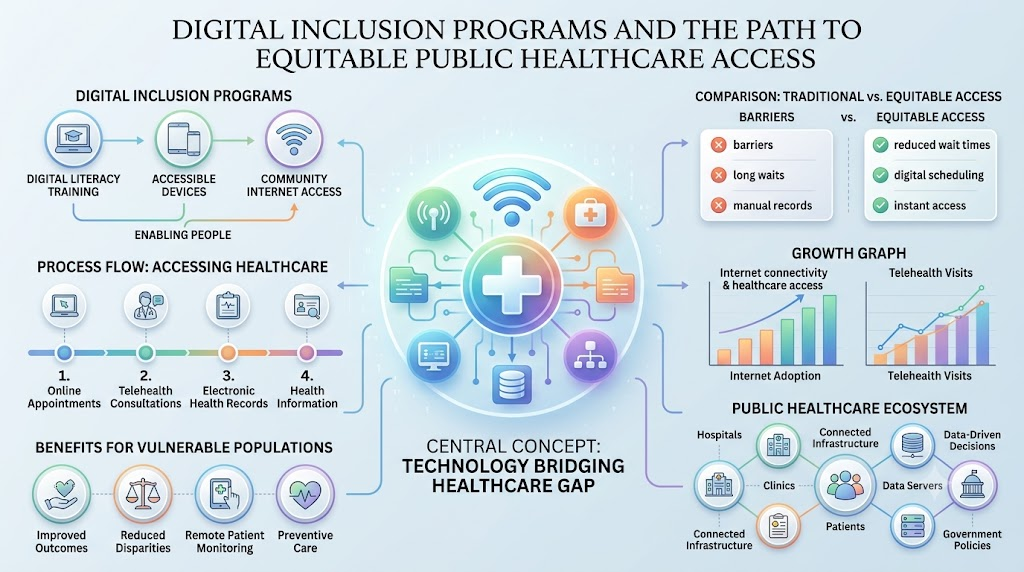
Public transit passes, prescription refills, housing assistance applications, and social security updates are increasingly digital-first. For elderly residents and rural households, an inability to use these online portals causes severe delays in essential care. Digital inclusion programs protect vulnerable community members by teaching them how to safely and independently handle personal business online.
The Vital Role of a Technology Nonprofit Organization
Commercial tech companies design platforms primarily for paying customers in commercial markets, leaving underserved neighborhoods and rural communities behind. A dedicated technology nonprofit organization steps in to fill this gap by treating basic connectivity and technical skills as essential public goods.
Nonprofit educators work alongside trusted neighborhood organizations, such as community libraries, neighborhood centers, and faith-based groups, to understand genuine daily needs before selecting tools. Operating through a clear model—Mission → Community Need → Responsible Technology → Measurable Impact—nonprofits design programs tailored to everyday challenges rather than commercial sales goals.
By serving as objective community advocates, nonprofits help local educators design accessible curricula, recruit patient volunteer instructors, and maintain deep community trust.
The Educational Core of Digital Literacy Programs
Handing a new computer to an adult who has never used one often leads to frustration. Without patient, human guidance, a simple error message or an unexpected software update can cause the device to be tucked away in a box. Structured digital literacy programs provide the practical instruction needed to build lasting confidence.
Grassroots educators prioritize essential life skills:
- Starting up devices, operating physical mice, using keyboards, and navigating file folders.
- Launching web browsers, managing browser tabs, and bookmarking important public websites.
- Creating secure personal email accounts and composing clear, professional messages.
- Recognizing deceptive online advertisements, phishing scams, and text fraud.
- Setting strong account passwords and using multi-factor authentication tools safely.
- Navigating municipal portals, public school communications, and regional health platforms.
When educators teach these skills with patience, initial apprehension turns into pride. A mother checking her child’s immunization records or a senior citizen joining a family video call gains immediate, practical independence.
Grounding Responsible AI Research and AI for Social Impact
As machine learning systems are introduced into public housing allocations, social service workflows, and educational platforms, community educators must help residents understand how automated decisions are made.
Deploying AI for social impact requires human-centered boundaries:
$$\text{Identified Community Challenge} \longrightarrow \text{Carefully Scoped AI System} \longrightarrow \text{Continuous Human Verification} \longrightarrow \text{Audited Community Benefit}$$
For instance, machine learning tools can assist local neighborhood centers by translating community bulletins into multiple local languages. However, without human review, translation errors can misinform residents about housing deadlines or clinic hours. Similarly, automated systems used to review social assistance applications can misinterpret data from historically underserved neighborhoods.
Through transparent, community-centered responsible AI research, educators and mentors ensure that automated systems are reviewed for fairness, privacy, and accountability. This vigilance ensures technology supports community dignity rather than creating new barriers.
Nurturing Youth Innovation Programs
Digital inclusion should not treat young people merely as passive consumers of video feeds and games. It should encourage them to become creators, problem-solvers, and civic advocates. Meaningful youth innovation programs invite neighborhood students to tackle local community challenges using technology.
Mentors guide students through an iterative design framework:
[ Identify a Local Challenge ]
               │
               ▼
   [ Brainstorming Solutions ]
               │
               ▼
[ Research & Community Feedback ]
               │
               ▼
     [ Building a Prototype ]
               │
               ▼
 [ Community Testing & Refinement ]
               │
               ▼
   [ Tangible Local Improvement ]
Working alongside supportive adult mentors, young people learn coding fundamentals, simple robotics, and data collection by addressing real neighborhood issues, such as mapping pedestrian crosswalk safety or documenting local recycling access. These programs evaluate success based on teamwork, critical thinking, and civic pride rather than startup valuations.
Supporting Nonprofit Digital Transformation
Local community shelters, grassroots legal aid offices, and neighborhood food pantries often operate with limited budgets, relying on paper forms, personal phones, and unbacked spreadsheets. Supporting nonprofit digital transformation helps these dedicated teams secure community records and deliver services more efficiently.
Community educators know that real transformation focuses on people, not just software licenses:
| Focus Area | Purchasing Software Alone | Developing Organizational Capability |
| Tool Selection | Buying expensive commercial software suites | Adopting lightweight, affordable tools that fit routine workflows |
| Staff Training | Infrequent vendor webinars | Hands-on peer coaching and simple step-by-step printed guides |
| Data Security | Sensitive documents saved across personal email accounts | Centralized, password-protected cloud storage with defined permissions |
| Sustainability | Platforms abandoned once initial grants end | Stable, maintainable tools suited to long-term community budgets |
By helping neighborhood charities implement secure file storage, clean databases, and accessible communication channels, technical mentors enable frontline advocates to focus their energy on helping families.
Structuring Corporate Social Impact Partnerships
Grassroots community centers cannot bridge the digital divide alone on modest operational budgets. Meaningful corporate social impact partnerships connect enterprise resources with community organizations that have established neighborhood trust.
The most effective corporate partnerships avoid public relations spectacles and focus on practical assets:
- Donating durable, refreshed business-grade laptops complete with operating software and power cables.
- Sponsoring continuous high-speed internet connections inside neighborhood gathering spaces.
- Funding the translation and printing of digital skills materials in multiple neighborhood languages.
- Creating formal employee volunteer programs that allow tech workers to mentor community learners on company time.
When corporate programs focus on meeting verified community needs, their investments create lasting educational and economic opportunities.
Organizing Technology Volunteer Opportunities
Many engineers, IT technicians, and university students want to give back to their local neighborhoods. Organized technology volunteer opportunities turn that technical expertise into dependable, compassionate community support.
Volunteers contribute across a variety of community roles:
- Providing patient, one-on-one computer tutoring for older adults and beginner learners.
- Mentoring students in after-school coding clubs, web design workshops, and robotics labs.
- Helping local community groups check website accessibility and set up secure data backups.
- Translating technical documentation into indigenous and immigrant languages.
To protect community learners and volunteers, programs should establish clear volunteer guidelines, offer sensitivity training, and enforce strict privacy rules. Clear project scopes prevent volunteer burnout while ensuring community members receive reliable, consistent help.
Universal Accessibility, Inclusion, and Privacy by Design
Digital inclusion initiatives must work for everyone, including individuals with visual, hearing, or physical disabilities, as well as those with limited English literacy. An educational portal that requires high-speed connections or complex keyboard commands leaves behind the very people who need it most.
Inclusive programs rely on straightforward design standards:
- Legible interfaces: High-contrast designs, clean fonts, and simple navigation menus that work smoothly across mobile and desktop devices.
- Assistive technology compatibility: Full support for screen readers, voice-input software, and high-contrast display options.
- Low-bandwidth optimization: Lightweight webpages and learning materials that load quickly on older computers and slow connections.
- Ethical data minimization: Collecting only the minimal personal data needed for class registration, securing written consent, and safeguarding family records.
Designing alongside community members with disabilities ensures that accessibility is treated as a core requirement from the start.
Practical Community Implementation Example
Consider an urban neighborhood center partnering with local adult educators and volunteer mentors to launch an accessible computer skills program for residents in a nearby housing cooperative.
Step 1: Community Listening Sessions
        └─ Talk directly with residents to identify everyday priorities: finding jobs, tracking benefits, homework help.
Step 2: Access & Equipment Audit
        └─ Check existing home devices, test local Wi-Fi strength, and identify languages spoken across the neighborhood.
Step 3: Practical Curriculum Development
        └─ Create bilingual, large-print instructional modules focused on real-world daily tasks.
Step 4: Hands-On Cohort Workshops
        └─ Host weekend classes with dedicated lab laptops and patient, one-on-one volunteer coaching.
Step 5: Cybersecurity & Privacy Foundations
        └─ Teach safe password habits, phishing identification, and family privacy practices.
Step 6: Open Community Tech Clinics
        └─ Run weekly drop-in sessions to help residents troubleshoot personal device errors safely.
Step 7: Progress Evaluation
        └─ Track workshop attendance, module completions, and participant confidence surveys.
Step 8: Iterative Program Refinement
        └─ Update workshop pacing, class schedules, and instructional materials based on direct learner feedback.
By prioritizing listening over assumptions, community educators build lasting trust and ensure their workshops solve real everyday challenges.
Impact Measurement and Key Takeaways
Measuring the success of digital inclusion initiatives requires looking beyond hardware shipments to evaluate genuine growth in community capability:
[ Program Activities ]  ──► Classes taught, lab computers set up, community broadband connected.
           │
           ▼
   [ Direct Outputs ]   ──► Learners attending sessions, instructional hours completed.
           │
           ▼
  [ Concrete Outcomes ] ──► Residents applying for jobs, submitting schoolwork, accessing healthcare online.
           │
           ▼
[ Long-Term Community ] ──► Increased household financial stability, higher graduation rates, reduced digital isolation.
       [ Impact ]
Potential Benefits
- Expands practical access to vocational certifications, online job listings, and educational materials.
- Helps older adults stay connected with healthcare providers, family members, and civic resources.
- Ensures students have the connectivity and hardware needed to complete their schoolwork.
- Keeps neighborhoods informed and connected during public emergencies or severe weather.
Operational Challenges
- Securing multi-year funding to cover recurring broadband subscriptions.
- Sourcing replacement computer parts and maintaining older hardware.
- Helping adult learners overcome digital anxiety and build confidence using computers.
- Retaining dedicated volunteer mentors over extended academic semesters.
FAQs
What is the primary purpose of digital inclusion programs?
Digital inclusion programs ensure that all community members have access to affordable broadband internet, functional computers, and patient digital literacy instruction.
Their objective is to ensure that modern digital systems expand personal opportunities rather than excluding people from economic, civic, and educational life.
Why is device distribution alone insufficient for community digital equity?
Donating computers without reliable home internet, accessibility accommodations, or patient skills training leaves major barriers untouched.
Without foundational training, basic security awareness, and ongoing technical support, distributed devices often become unusable due to software errors, malware, or lack of connectivity.
How do digital literacy programs improve local employment opportunities?
These programs teach job seekers how to write resumes, apply through online job portals, communicate via email, and use common office productivity tools.
These practical skills help residents identify job openings and apply with confidence for roles that require daily computer use.
How does a technology nonprofit organization differ from a commercial technology firm?
A technology nonprofit organization measures its success by community benefit rather than commercial software licensing or quarterly profit margins.
Nonprofits focus on building long-term local capability, promoting ethical technology adoption, and providing free or low-cost learning resources to neighborhoods that commercial markets overlook.
How can community programs apply AI for social impact responsibly?
Community groups can use machine learning tools to translate informational guides, organize local resource directories, or improve appointment scheduling systems.
To prevent harm, these applications must include active human oversight, strict data privacy safeguards, and regular checks for algorithmic bias.
What does responsible AI research focus on?
Responsible AI research examines how automated systems can be designed, tested, and monitored to ensure fairness, transparency, user safety, and accountability.
It works to prevent automated systems from reinforcing historical bias or making unfair decisions in social programs, public benefits, and hiring.
How do youth innovation programs benefit students in underserved areas?
These programs provide young learners with the space, tools, and mentorship to design technical solutions for everyday neighborhood problems.
Rather than focusing on commercial startups, they emphasize collaboration, critical thinking, coding fundamentals, and community pride through hands-on technical projects.
What makes nonprofit digital transformation different from standard software procurement?
Software procurement merely involves purchasing licenses, while digital transformation focuses on helping staff build confidence, learn secure data practices, and improve service delivery.
It ensures that technology investments match the organization’s real mission, staff capacity, and long-term operating budget.
How can companies participate responsibly in corporate social impact partnerships?
Companies can help by donating dependable enterprise computers, funding community broadband installations, and encouraging technical staff to volunteer as mentors.
The best corporate partnerships focus on meeting real, community-identified needs rather than chasing short-term marketing publicity.
Where can local professionals find technology volunteer opportunities?
Professionals can reach out to neighborhood libraries, adult education centers, local community groups, and organizations like the Cotocus Foundation.
Volunteers can tutor adult learners, lead after-school coding clubs, or help local nonprofits improve their website accessibility and data security practices.
Conclusion
True digital equity is not measured by the number of laptops distributed or fiber optic cables laid. It is measured by the confidence, dignity, and independence people gain when they use technology to improve their daily lives. When neighborhoods treat computing hardware, high-speed connectivity, and patient digital education as essential public goods, they create dependable pathways toward educational achievement, economic resilience, and civic participation. Building an inclusive future requires steady, compassionate collaboration among educators, community organizers, skilled technical volunteers, and mission-driven institutions like the Cotocus Foundation. By focusing on practical community needs, responsible AI practices, and accessible technology education, we can ensure that modern digital tools serve human well-being and strengthen community bonds.
