Introduction
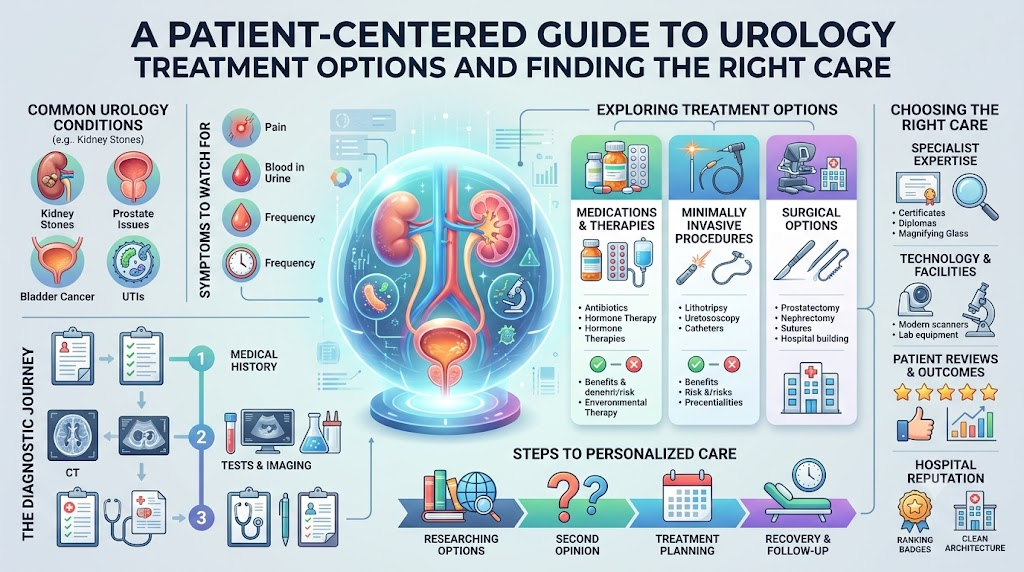
Experiencing persistent urinary changes, pelvic discomfort, or kidney discomfort often raises immediate questions about what steps to take next. The urinary tract and male reproductive system handle complex filtration and excretion duties that directly influence everyday well-being. Finding trustworthy answers about diagnostics, potential interventions, and surgical advancements should not be overwhelming or confusing. This comprehensive guide breaks down modern urology treatment pathways across kidney, bladder, and prostate conditions. You will learn what different symptoms might signify, how clinical teams confirm diagnoses, and how to evaluate care facilities. Educational resources at UrologyHospitals.com help patients and families research clinical procedures and connect with experienced medical teams.
Understanding the Urological System and When to Seek Care
The urological system includes the kidneys, ureters, urinary bladder, and urethra, along with the male reproductive organs such as the prostate, testes, and seminal vesicles. These organs manage essential bodily processes: filtering metabolic waste from blood, balancing bodily fluids and electrolytes, storing and discharging urine, and supporting male fertility.
Because these structures are closely connected, an issue in one area can cause noticeable symptoms throughout the tract. A small blockage in a ureter can trigger intense flank pain, while an enlarged prostate can restrict the flow of urine leaving the bladder. Patients seek medical evaluation for a wide variety of reasons, ranging from routine screenings and sudden infections to long-standing urinary flow problems or abnormal findings identified during regular physical exams.
Common Symptoms and Warning Signs
Urinary symptoms vary widely based on the underlying organ involved. Recognizing early warning signs helps individuals seek timely professional care before complications develop.
Common urological symptoms include:
- Sharp, intermittent, or aching pain in the lower back, sides (flanks), or lower abdomen
- Burning, stinging, or burning discomfort during urination (dysuria)
- Increased urinary frequency, particularly waking multiple times during the night (nocturia)
- Sudden, urgent needs to urinate that are difficult to postpone
- Visible blood in the urine, giving it a pink, brownish, or red tint (hematuria)
- Trouble initiating urination, a weak stream, or a stream that stops and starts
- Feeling that the bladder does not empty completely after urination
- Unexplained fever, chills, and lower back tenderness paired with urinary discomfort
Symptoms alone cannot pinpoint a definitive diagnosis. A burning sensation might indicate a simple urinary tract infection, but it can also stem from bladder irritation or an anatomical obstruction. Experiencing any of these changes warrants an objective evaluation rather than guessing or waiting for symptoms to clear on their own.
Causes and Contributing Risk Factors
Urological conditions arise from a mixture of genetic traits, lifestyle habits, structural variations, and biological aging.
- Age and Hormonal Changes: The prostate naturally enlarges over time due to hormonal changes, making urinary hesitancy more common as men age.
- Fluid Intake and Nutrition: Low daily fluid intake concentrates urine, significantly increasing the likelihood of mineral crystallization and stone formation.
- Anatomy: Females have shorter urethras than males, making them more susceptible to ascending bacterial infections.
- Family History: A family background of kidney stones or prostate diseases can raise an individual’s baseline likelihood of experiencing similar conditions.
- Prior Medical Interventions: Previous pelvic surgeries, catheterizations, or recurring urinary tract infections can lead to scar tissue formation, which may narrow delicate urinary passages.
How Urological Conditions Are Diagnosed
Healthcare providers use a structured sequence of diagnostic tests to evaluate symptoms. Specialists choose specific diagnostic paths based on medical history, physical exams, and clinical risk factors.
- Urinalysis and Urine Culture: A standard laboratory urinalysis examines urine for microscopic blood cells, elevated white blood cells, protein, and crystals. If an active bacterial infection is suspected, a urine culture isolates the specific bacteria to determine which antibiotic will treat it effectively.
- Blood Chemistry Panels: Blood tests help evaluate kidney function by measuring serum creatinine and blood urea nitrogen (BUN). For men undergoing prostate assessments, a Prostate-Specific Antigen (PSA) test measures a protein produced by the prostate gland.
- Ultrasound Imaging: Renal and bladder ultrasounds use high-frequency sound waves to visualize organ shapes, check for fluid build-up, spot kidney stones, and verify whether the bladder empties fully after urination.
- Computed Tomography (CT) Scans: Low-dose non-contrast CT scans provide detailed cross-sectional views of the abdomen and pelvis. They are frequently used in emergency settings to detect the precise size and location of stones.
- Cystoscopy: In this procedure, a specialist gently inserts a thin, lighted tube with a tiny camera (a cystoscope) through the urethra into the bladder. This allows direct visual inspection of the urethral lining, the prostate channel, and the bladder wall.
- Urodynamic Testing: This series of tests assesses how well the bladder, sphincters, and urethra store and release urine, helping identify nerve- or muscle-related causes of urinary dysfunction.
Navigating Modern Urology Treatment Pathways
Medical teams recommend treatments based on a patient’s overall health, symptom severity, diagnostic findings, and individual recovery goals.
Non-Invasive Approaches and Medication
Initial management frequently begins with supportive therapies or prescription medications. For mild conditions, scheduled monitoring and hydration adjustments may be sufficient. When medication is necessary, doctors may prescribe antibiotics for confirmed infections, alpha-blockers to relax smooth muscle fibers in the prostate and bladder neck, or 5-alpha-reductase inhibitors to reduce prostate tissue volume over time.
Minimally Invasive Procedures
If medications do not provide sufficient relief or are not suitable, minimally invasive interventions provide effective alternatives without requiring large incisions. These procedures use endoscopic tools, focused sound waves, or laser energy passed through natural body openings to clear blockages, relieve urinary restrictions, and remove damaged tissue.
Surgical Interventions and Advanced Techniques
When structural repairs, large blockages, or complex conditions require extensive intervention, surgical operations become necessary. Advanced centers frequently use robotic-assisted platforms alongside open or laparoscopic approaches to improve surgical precision.
Condition-Specific Treatment Approaches
Kidney Stone Management
Kidney stone care depends on stone size, chemical composition, location within the urinary tract, and the presence of severe pain or obstruction.
- Hydration and Observation: Stones smaller than 4 to 5 millimeters often pass on their own through consistent oral hydration, pain relief, and temporary medications that relax the ureter.
- Extracorporeal Shock Wave Lithotripsy (ESWL): A non-invasive procedure that uses external acoustic sound waves to break stones into tiny, sand-like fragments that can pass naturally in urine.
- Ureteroscopy (URS): A flexible endoscope is passed through the urethra and bladder into the ureter or kidney. A small laser fiber then breaks the stone into fragments, which are extracted with a miniature retrieval basket.
- Percutaneous Nephrolithotomy (PCNL): For stones larger than two centimeters or unusually shaped staghorn calculi, a surgeon makes a small incision in the patient’s back to access the kidney directly and break up the stone.
Enlarged Prostate (Benign Prostatic Hyperplasia)
Benign prostatic hyperplasia (BPH) is a non-cancerous enlargement of the prostate gland that can compress the urethra and restrict normal urinary flow.
- Lifestyle Adjustments: Limiting evening fluid intake and avoiding excessive caffeine or alcohol can help manage mild urinary symptoms.
- Prescription Medications: Medications can relax muscular tension around the bladder outlet or gradually shrink prostate tissue volume.
- Minimally Invasive Interventions: Techniques such as convective water vapor energy or temporary mechanical implants relieve urethral compression with minimal downtime.
- Transurethral Resection of the Prostate (TURP): A surgical procedure where an instrument passed through the urethra removes obstructing internal prostate tissue to restore an open urinary channel.
Prostate Cancer Care
Prostate cancer care requires a personalized, multidisciplinary approach tailored to the tumor’s stage, grade (Gleason score), and the patient’s age and overall health.
- Active Surveillance: For low-risk, slow-growing tumors, doctors may recommend close monitoring with regular PSA tests, MRI scans, and periodic biopsies rather than immediate surgery or radiation.
- Surgical Removal: Radical prostatectomy involves the surgical removal of the prostate gland and surrounding tissues, frequently performed using robotic-assisted techniques to preserve nearby nerves.
- Radiation Therapy: External beam radiation or internal radioactive seed implants (brachytherapy) destroy cancer cells within the prostate tissue.
- Systemic Therapies: Hormone therapy, chemotherapy, or immunotherapy may be used when disease spreads beyond the prostate capsule.
Urinary Tract Infections
Urinary tract infections (UTIs) happen when bacteria, most often Escherichia coli, enter the urethra and multiply in the urinary bladder.
- Targeted Antibiotic Courses: Prescriptions are chosen based on urine culture results to effectively clear the specific bacterial strain.
- Full Medication Adherence: Patients should finish their entire prescribed antibiotic course, even after symptoms resolve, to prevent recurring infections or antibiotic resistance.
- Recurrent Infection Evaluation: Patients experiencing three or more UTIs in a single year should undergo an anatomical and functional evaluation to check for underlying retention, stones, or structural variations.
Bladder Cancer Care
Bladder cancer is typically suspected when a patient experiences painless, visible blood in the urine, and diagnosis is confirmed using cystoscopy and cross-sectional imaging.
- Transurethral Resection of Bladder Tumor (TURBT): A procedure used to both diagnose and treat superficial bladder tumors by removing abnormal growths through a cystoscope.
- Intravesical Therapy: Liquid medications, such as Bacillus Calmette-Guérin (BCG) or chemotherapy agents, are administered directly into the bladder via a temporary catheter to reduce the risk of tumor recurrence.
- Radical Cystectomy: For muscle-invasive tumors, surgical removal of the urinary bladder is required, followed by the creation of an alternative urinary diversion, such as an ileal conduit or neobladder.
The Role of Robotic Surgery in Urology
Robotic-assisted surgery provides surgeons with enhanced 3D high-definition visualization, tremor-filtration technology, and articulating instruments that move with greater range than the human hand. In complex procedures like radical prostatectomies, partial nephrectomies, and reconstructive repairs, robotic assistance allows for precise tissue handling.
While robotic systems provide ergonomic and visual advantages, surgical success depends primarily on the surgeon’s training, procedural volume, and case selection. Robotic surgery is one of several surgical techniques, and an experienced surgeon will choose the approach that best matches the patient’s anatomy and medical condition.
How to Choose Urology Hospitals and Specialists
Finding the right care team is an important step in managing an ongoing urological issue. Taking the time to research providers and facilities ensures you receive care tailored to your specific needs.
- Specialist Qualifications and Fellowship Training: Look for board-certified specialists who have completed dedicated fellowship training in sub-disciplines like urologic oncology, endourology, or reconstructive pelvic surgery.
- Institutional Experience: Research the hospital’s procedural volume for the specific treatment you need. Hospitals that perform a procedure regularly tend to have lower complication rates and more standardized recovery protocols.
- On-Site Diagnostic Technology: A hospital equipped with in-house high-resolution CT, 3T MRI, digital cystoscopy suites, and dedicated urodynamic laboratories can complete evaluations more efficiently.
- Multidisciplinary Tumor Boards: For oncology patients, hospitals that coordinate care across medical oncology, radiation oncology, pathology, and urologic surgery provide thorough, well-rounded care plans.
- Emergency and Postoperative Support: Ensure the facility provides 24-hour urology coverage and accessible outpatient follow-up services to address any post-procedure recovery questions.
When searching locally for a specialist, look beyond basic location proximity. Consider appointment availability, whether the practice coordinates with your primary care provider, and whether the clinical team takes the time to explain treatment options clearly.
Questions to Ask During Your Consultation
Preparing a list of clear, direct questions helps you make informed decisions during your appointment:
- What underlying factors are most likely causing my urinary symptoms?
- Which specific diagnostic tests are necessary, and what will each test show?
- What are the clinical risks and expected benefits of each available treatment?
- Are there non-surgical approaches or monitoring strategies suitable for my condition?
- How much experience does your surgical team have with this specific procedure?
- What is the expected recovery timeline, and when can I return to work and regular activities?
- What signs or symptoms during recovery should prompt me to contact your office or seek immediate emergency care?
- Will this treatment affect my urinary control or sexual function?
- What follow-up appointments and monitoring tests will I need after treatment?
- Is there value in seeking a second opinion before finalizing a treatment decision?
Relevant Comparison Table
| Treatment Category | Common Clinical Indications | Potential Advantages | Key Considerations |
| Observation / Surveillance | Small kidney stones, low-risk prostate cancer, mild BPH | Avoids procedural risks and immediate side effects | Requires adherence to scheduled imaging and regular laboratory tests |
| Oral Medications | Uncomplicated UTIs, BPH symptoms, initial overactive bladder | Non-invasive, widely accessible outpatient therapy | Potential systemic side effects; may require long-term use |
| Minimally Invasive Interventions | Moderate kidney stones, symptomatic urinary tract obstruction | Outpatient recovery, minimal incisions, lower blood loss | Suitability depends on precise stone size, location, or anatomy |
| Surgical Interventions | Invasive tumors, massive stone burdens, complex anatomical repairs | Directly removes diseased tissue or provides definitive repair | Involves general anesthesia, hospital recovery, and inherent procedural risks |
Practical Examples
- Hypothetical Example 1: Managing Sudden Kidney Stone PainA 42-year-old individual develops sudden, severe pain in their right flank that radiates toward the lower abdomen. At an emergency facility, an unenhanced CT scan identifies a 4 mm stone in the distal ureter without severe kidney swelling or infection. Because the stone is small and pain is manageable with oral medications, the clinical team recommends conservative management with hydration, pain relief, and outpatient follow-up. The stone passes naturally five days later without procedural intervention.
- Hypothetical Example 2: Addressing Benign Prostate EnlargementA 63-year-old man notices a progressively weaker urine stream and wakes three times each night to use the bathroom. A physical examination and post-void residual ultrasound show moderate benign prostatic enlargement with incomplete bladder emptying. After discussing options with a specialist, he begins an initial course of medication to relax the surrounding smooth muscle. When symptoms only partially improve after several months, he consults with his care team to review minimally invasive outpatient procedures that can widen the urinary channel.
- Hypothetical Example 3: Evaluating HematuriaA 58-year-old individual notices visible blood in their urine without any associated pain. Rather than assuming the bleeding was caused by a minor infection or strenuous exercise, they consult a specialist for a thorough evaluation. The care team orders a renal ultrasound, urine cytology, and an outpatient flexible cystoscopy to evaluate the bladder lining directly. This step-by-step diagnostic process rules out serious conditions early, providing peace of mind and an accurate treatment plan.
Decision-Making Framework
Patients can use this structured seven-step framework to navigate urological care:
- Step 1: Document Symptoms AccuratelyKeep a brief log tracking symptom timing, frequency, severity, fluid intake, and any noticeable triggers.
- Step 2: Obtain an Objective Diagnostic EvaluationUndergo baseline medical tests, such as urinalysis and imaging, rather than attempting to self-diagnose based on symptoms alone.
- Step 3: Review All Available Care ApproachesAsk your healthcare provider to explain the full range of options, including active surveillance, lifestyle adjustments, medications, and surgical procedures.
- Step 4: Weigh Risks and Expected BenefitsDiscuss potential side effects, complication rates, recovery expectations, and functional outcomes for each potential path.
- Step 5: Research Qualified Healthcare FacilitiesEvaluate providers based on their clinical experience, hospital facilities, diagnostic equipment, and multidisciplinary capabilities.
- Step 6: Consider Personal CircumstancesFactor in practical considerations such as travel time, work leave, caregiver support, and necessary follow-up schedules.
- Step 7: Partner with Your Clinical TeamMake a shared, informed decision with your physician, and schedule all required follow-up appointments and diagnostic checks.
Common Mistakes to Avoid
- Ignoring Visible Blood in the Urine: Even a single episode of painless hematuria warrants prompt medical evaluation to rule out bladder or kidney conditions.
- Self-Medicating with Leftover Antibiotics: Taking unfinished or unprescribed antibiotics masks underlying symptoms, delays accurate diagnoses, and contributes to drug-resistant bacterial strains.
- Assuming Urinary Problems Are Simply Normal Aging: While prostate enlargement and pelvic changes become more common over time, severe urinary hesitation or incontinence can and should be treated.
- Focusing Solely on Facility Marketing: Selecting a care facility based primarily on marketing materials rather than verified provider experience, volume, and comprehensive support services.
- Skipping Post-Treatment Follow-Up Visits: Missing follow-up appointments after procedures can cause clinicians to miss silent stone recurrences, asymptomatic urinary retention, or early disease progression.
Key Takeaways
- Seek Timely Evaluation: Early assessment of symptoms like persistent pain, frequent urination, or blood in the urine helps identify conditions before complications develop.
- Diagnosis Guides the Plan: Accurate diagnosis using urine tests, blood panels, and targeted imaging is essential for choosing the right treatment approach.
- Treatment Is Individualized: Modern urological care includes a spectrum of options, from active monitoring and oral medications to minimally invasive and robotic-assisted surgeries.
- Provider Experience Counts: Look for board-certified specialists and well-equipped hospitals with verifiable experience in treating your specific condition.
- Ask Proactive Questions: Discussing procedural risks, alternatives, recovery timelines, and long-term functional outcomes helps you make confident healthcare choices.
- Complete All Prescribed Follow-Up: Consistently attend scheduled follow-up visits, complete imaging studies, and finish medication courses to support a smooth, lasting recovery.
Frequently Asked Questions
What conditions does a urologist treat?
A urologist diagnoses and manages conditions of the male and female urinary systems, as well as the male reproductive organs. This includes kidney stones, urinary tract infections, urinary incontinence, bladder issues, benign prostatic hyperplasia, prostate cancer, and male fertility concerns.
When should someone make an appointment to see a urologist?
You should see a specialist if you notice visible blood in your urine, ongoing pain in your lower back or flanks, severe pain during urination, frequent urinary urgency, trouble emptying your bladder, or abnormal results on routine tests like a PSA screening.
How do doctors diagnose kidney stones?
Doctors diagnose kidney stones by combining a medical history review with laboratory urinalysis to detect microscopic blood. They confirm the stone’s exact size, shape, and location along the urinary tract using imaging tests, most often a low-dose non-contrast CT scan or renal ultrasound.
What treatments are available for kidney stones?
Small stones often pass on their own with hydration, pain management, and medications that relax the ureter. Larger or obstructing stones may require extracorporeal shock wave lithotripsy (ESWL), ureteroscopy (URS) with laser fragmentation, or percutaneous nephrolithotomy (PCNL) through a small back incision.
What are the primary treatments for an enlarged prostate (BPH)?
Management ranges from lifestyle adjustments and medications that relax or shrink prostate tissue to minimally invasive therapies like water vapor therapy. When symptoms are more severe, surgical procedures such as transurethral resection of the prostate (TURP) remove obstructing tissue to restore healthy urinary flow.
How do specialists determine the best treatment for prostate cancer?
Care teams evaluate the cancer’s stage, tumor grade (Gleason score), PSA levels, and the patient’s age and overall health. Options range from active surveillance for low-risk disease to robotic-assisted radical prostatectomy, external radiation therapy, brachytherapy, and systemic medical therapies.
Why is blood in the urine considered a symptom that needs prompt evaluation?
Hematuria can stem from benign causes like rigorous exercise or minor infections, but it can also be an early sign of kidney stones, vascular malformations, or bladder and kidney cancers. Prompt diagnostic evaluation rules out serious conditions early, when they are easiest to manage.
What are the main benefits of robotic urology surgery?
Robotic-assisted surgery provides surgeons with high-definition 3D visualization and wristed instruments that move with greater precision in narrow pelvic spaces. This approach can reduce intraoperative blood loss, minimize surgical incisions, and support smoother patient recoveries when performed by an experienced surgical team.
How should a patient evaluate a hospital for urological surgery?
Look for hospitals with dedicated urology departments, experienced surgical teams, low complication rates, modern diagnostic and surgical technology, and 24-hour emergency coverage. A coordinated care team is especially important for complex oncology or reconstructive cases.
What should I consider when searching for a specialist nearby?
Consider whether the specialist has fellowship training in your specific condition, how easily you can access their clinic for routine follow-ups, their hospital affiliations, their appointment availability, and whether they communicate treatment options and recovery expectations clearly.
Conclusion
Navigating urological symptoms requires a clear, informed approach that prioritizes accurate diagnosis and balanced medical care. Whether you are managing recurring kidney stones, seeking relief from an enlarged prostate, or evaluating complex oncological therapies, modern urology offers a wide range of effective treatment paths tailored to individual health profiles. Taking the time to understand your diagnosis, ask your care team practical questions, and weigh the benefits and considerations of each approach helps you take an active, confident role in your health. Platforms like UrologyHospitals.com offer educational resources that help patients research conditions, understand modern procedures, and locate experienced urology specialists and hospital facilities to support their long-term recovery.
