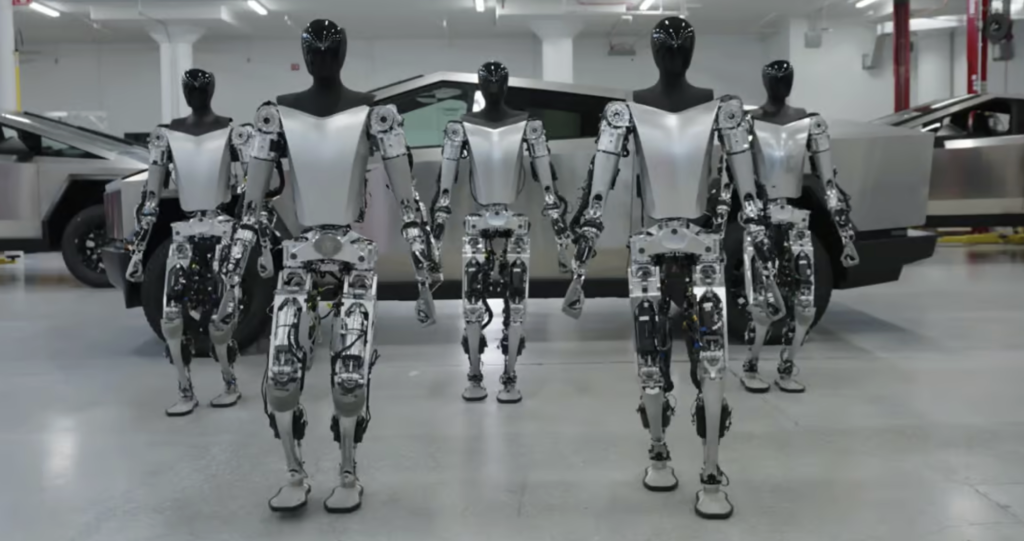
Tesla Optimus Robot: A Comprehensive Overview (Inception to July 2024)
Inception and Early Development
- Announcement and Prototype (2021-2022)
- 2021: Tesla announced the Optimus robot, also known as the Tesla Bot, at the company’s AI Day event in August. The initial concept video showcased the potential capabilities of the humanoid robot.
- 2022: Tesla revealed the first working prototype during the second AI Day. The prototype demonstrated basic functionalities, including walking and simple task performance.
Milestones and Progress (2022-2024)
- Development and Upgrades (2022-2023)
- 2022: Initial prototypes, nicknamed Bumblebee, showcased limited capabilities but provided a foundation for further development.
- 2023: Introduction of Optimus Gen 1, with improvements in stability and task performance. By December 2023, Optimus Gen 2 was unveiled, featuring significant upgrades such as enhanced hands with 22 degrees of freedom, better balance, and faster movement.
- Factory Deployment and Testing (2023-2024)
- 2023: Initial deployments of Optimus robots in Tesla factories began. These robots performed simple, repetitive tasks, helping to refine their operational capabilities.
- 2024: Multiple Optimus robots are now being used autonomously in Tesla factories, performing tasks like sorting 4680 battery cells, folding laundry, and more complex movements like walking through offices and performing yoga. Continuous software and hardware updates have improved their precision and efficiency.
Key Features and Capabilities
- Technical Specifications
- Height and Weight: Optimus stands at 5 feet 8 inches tall and weighs around 125 pounds.
- Power and Sensors: Equipped with cameras, hand tactile sensors, and force sensors to navigate and interact with its environment. Uses Tesla’s full self-driving (FSD) computer for its AI and control systems.
- Task Performance: Can autonomously perform a variety of tasks, including sorting objects, walking through complex environments, and simple manual tasks.
- Autonomy and AI
- Optimus uses an end-to-end neural network for its autonomous capabilities, allowing it to perform tasks with minimal human intervention. It continues to learn and improve its performance through data collected during operations.
Future Prospects
- Commercialization and Pricing
- Tesla aims to start selling the Optimus robot by the end of 2025, with an estimated price of around $30,000. The robot is expected to be a valuable asset for industries looking to automate dangerous, repetitive, or tedious tasks.
- CEO Elon Musk has indicated that the production cost of Optimus could eventually be less than half that of a car, making it affordable for broader industrial use.
Conclusion
The Tesla Optimus robot has made significant strides since its announcement in 2021. From early prototypes to autonomous deployment in factories, Tesla continues to refine and enhance the capabilities of Optimus. With the potential for widespread industrial application and future commercialization, Optimus represents a major step forward in robotics and automation.
