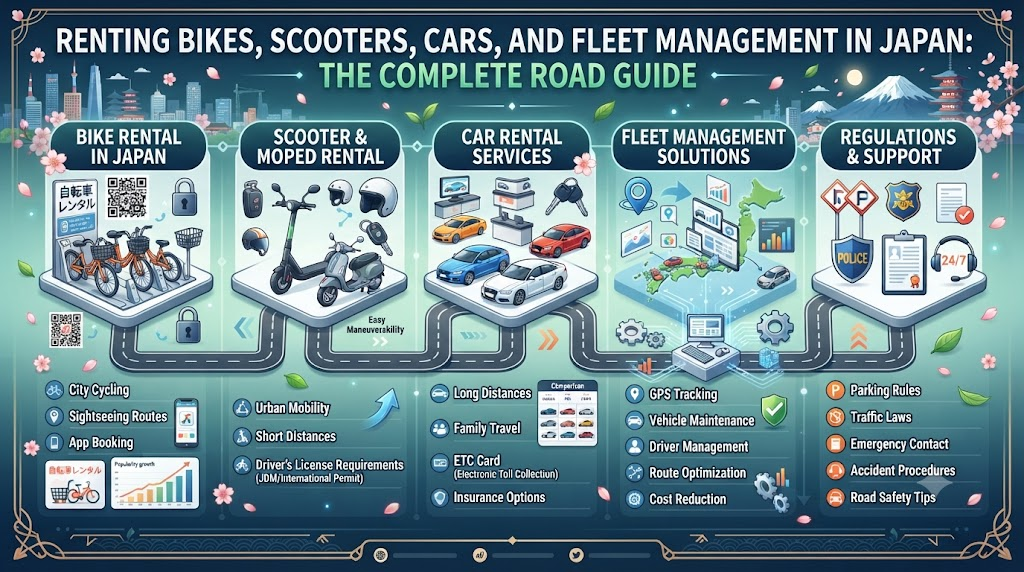
Introduction
Exploring Japan from behind a handlebar or steering wheel gives you true personal freedom. Smooth asphalt winds through breathtaking alpine passes and quiet coastal villages. Neon-lit city streets hum with energy as evening falls across bustling metro centers.
Riding on your own terms reveals hidden spots that trains never reach. You can pause at mountain vistas, historic roadside temples, and scenic ocean lookouts whenever you wish.
Travelers need a simple, safe way to discover trusted local rentals across the country. Meanwhile, Japanese rental shops seek smarter tools to run daily operations smoothly.
MotoShare bridges this gap naturally as a modern two-sided platform. It connects eager riders and tourists directly with verified local vehicle rental owners nationwide.
Why Rent a Motorcycle in Japan?
Riding across Japan offers an unforgettable journey filled with pristine roads and deep hospitality. You will find clean roadside rest stations, known locally as Michi-no-Eki, along every major route. These highway stations offer fresh regional food, hot coffee, and spotless facilities for tired travelers.
Winding mountain roads reward you with crisp air and thrilling twists. Quiet shrines sit hidden behind tall cedar trees just off the main road. Every turn brings you closer to authentic Japanese culture and peaceful landscapes.
Matching your motorcycle engine size to your actual riding skill is essential. Japanese regulations divide motorcycles into specific engine tiers with distinct road privileges.
Small 50cc mopeds work well for short, slow neighborhood trips. Light 125cc bikes handle city streets with ease but cannot enter tollways. Versatile 250cc motorcycles give you full expressway access without heavy handling. Heavy 400cc and larger touring bikes offer plush comfort for long highway distances across prefectures.
Choosing Your Ride: Scooters, Touring Bikes, and Cars
Selecting the right vehicle depends on your route, luggage, and road experience. Dense urban streets favor narrow, agile two-wheelers that slip through heavy traffic. High-speed expressways demand stable engines that can cruise comfortably at speed. Think carefully about how many bags you carry and how far you plan to travel each day.
| Vehicle Type | Best Use | Rider License Class Needed | Luggage Space | Road Comfort |
| City Scooter (50cc–125cc) | Short city commutes and neighborhood errands | Category A (or sub-category for light bikes) | Under-seat bay fits one helmet or a small backpack | High comfort for short city trips, but bumpy on rough roads |
| Standard Commuter (250cc) | Mixed urban riding, day trips, and scenic coastal roads | Category A motorcycle endorsement | Rear tail rack or small soft side bags | Balanced upright riding posture with smooth road handling |
| Touring Motorcycle (400cc–1000cc+) | Long multi-day road journeys and high-speed expressways | Full unrestricted Category A motorcycle endorsement | Hard side panniers, top case, and tank bag | Maximum ergonomic highway comfort with wind protection |
| Compact Rental Car / Kei Car | Family journeys, rainy days, and heavy luggage trips | Standard Category B passenger car endorsement | Large trunk area holding multiple suitcases | Full weather shelter, climate control, and plush seating |
Japanese expressways enforce strict speed limits ranging from 80 to 120 km/h. Every highway vehicle needs an electronic toll collection device to pay tolls automatically. Motorcycles over 250cc carry passengers easily, but city highway rules restrict tandem riding in central Tokyo.
レンタルバイク 東京 and Motorcycle Rental Tokyo
Riding through the capital of Japan offers an unforgettable sensory experience. You can rent a motorcycle in Tokyo to feel the pulse of the metropolis up close.
Crossing the Rainbow Bridge gives you panoramic views of Tokyo Bay and the skyline. The futuristic waterfront district of Odaiba features wide, open avenues that are fun to explore on two wheels.
Navigating the central avenues of Ginza, Shinjuku, and Roppongi requires steady focus. City traffic moves quickly, but drivers remain exceptionally polite and predictable.
Tokyo also acts as the ultimate launchpad for incredible weekend getaways. Within two hours, you can leave neon towers behind and enter the scenic mountain curves of Hakone.
Continuing past Hakone brings you face-to-face with the snow-capped peak of Mount Fuji. Clear highland air and sweeping lakeside roads make this route a paradise for motorcycle touring enthusiasts.
When planning your trip, booking a レンタルバイク 東京 through a trusted service ensures your machine is fully inspected and expressway-ready. Quality services for motorcycle rental Tokyo provide clean helmets, phone mounts, and toll transponders so you can head straight for the mountains without delay.
スクーターレンタル 東京 and Affordable Urban Cruising
Lightweight scooters are the undisputed kings of central city navigation. They offer a nimble, stress-free way to run errands, visit neighborhood cafes, and check out famous landmarks.
A compact scooter slips through dense urban corridors where larger touring motorcycles feel heavy and clumsy. You can hop between historic Asakusa, trendy Shimokitazawa, and quiet residential backstreets on a single tank of fuel.
Parking in central Tokyo requires strict discipline and local knowledge. Ward parking monitors patrol public sidewalks aggressively to issue steep monetary parking tickets.
You must park only inside designated motorcycle parking bays marked clearly with the word バイク. These dedicated parking bays are located near train stations, underground garages, and commercial department stores.
Choosing a スクーターレンタル 東京 allows you to save money while avoiding crowded subway lines. Budget-conscious riders can secure a 東京 バイク レンタル 安い to enjoy affordable, independent transportation across all 23 special wards.
レンタルバイク 日本 and Touring Across the Country
Riding beyond Tokyo reveals the true majesty of the Japanese countryside. Long-distance road touring takes you along rugged ocean cliffs, deep river gorges, and volcanic ridges.
The Izu Peninsula offers sweeping coastal turns paired with views of crashing Pacific waves. Inland, the high mountain switchbacks of Nagano deliver crisp alpine passes and relaxing hot spring towns.
Further north, the vast open roads of Hokkaido treat riders to endless horizons, rolling flower fields, and cool summer breezes. Each Japanese prefecture displays distinct regional food, historic architecture, and local customs.
Mountain weather can shift rapidly from bright sunshine to dense highland fog. Pack quality waterproof gear, and choose a bike equipped with heated handlebar grips for chilly mountain mornings.
Take regular rest breaks at roadside stations along your route. These welcoming stops offer regional snacks, clean restrooms, and tourist maps.
Booking a nationwide レンタルバイク 日本 opens up thousands of kilometers of well-maintained highways. Selecting a top-tier motorcycle rental Japan package gives you complete peace of mind with 24/7 roadside assistance across every prefecture.
Pre-Ride Safety Check and Highway Rules
A proper mechanical inspection protects your life before you roll out of the rental depot. Japanese rental operators maintain their fleets carefully, but personal verification remains the rider’s responsibility. Take five minutes to inspect the vehicle thoroughly alongside your rental shop agent.
| Check Point | What to Look For | Why It Matters |
| Tire Tread & Air Pressure | Deep tread grooves, no sidewall cracks, and firm tire pressure | Maintains strong road grip on wet mountain curves and avoids expressway blowouts |
| Front & Rear Brake Levers | Firm hydraulic resistance and thick friction pads with plenty of material | Guarantees instant stopping power at high speeds and steep downhill descents |
| Headlight & Turn Signals | Bright high and low beams, clean brake light, and flashing blinkers | Ensures other drivers see your vehicle clearly inside dark mountain tunnels |
| Jibaiseki Insurance Papers | Valid official certificate stored safely inside the under-seat document slot | Fulfills mandatory Japanese legal liability requirements during any traffic stop |
| ETC Card Unit & Reader | Secure card insertion, green indicator light, and solid antenna mount | Prevents sudden gate closures and dangerous rear-end collisions at toll plazas |
| Mirrors & Handlebar Controls | Crisp rearward visibility, smooth throttle return, and easy clutch play | Lets you monitor highway traffic safely while maintaining effortless vehicle control |
Remember that traffic moves on the left side of the road across all of Japan. Expressways require you to be at least 20 years old with three years of riding experience to carry a passenger. Take high-resolution photos of all pre-existing scratches before signing your rental paperwork.
レンタカー 東京 and Car Rental Tokyo for Groups
Renting a motorcycle is thrilling, but four wheels make better sense in certain travel conditions. Japan experiences a heavy summer rainy season known as tsuyu, alongside occasional autumn typhoons. A car protects your travel group from torrential downpours and cold winds.
Cars are also ideal when carrying heavy suitcases, baby strollers, or outdoor sports equipment. Families traveling with small children or elderly relatives enjoy far greater comfort inside a climate-controlled cabin.
Navigating the highway network in an automobile is simple and efficient. Every expressway interchange features automated toll gates that scan electronic transponders. Renting an ETC toll card with your vehicle eliminates the need to stop and pay tolls with physical cash.
For city exploration, compact Kei-cars are incredibly practical. These small yellow-plate vehicles maneuver through tight neighborhood alleys effortlessly.
When visiting shopping centers or hotels, you will often use automated mechanical parking towers. Attendants guide your vehicle onto steel elevator platforms that store the car safely underground.
Securing a レンタカー 東京 gives your entire family total travel freedom. Choosing a reliable car rental Tokyo service lets you explore remote temples and national parks far beyond the reach of major train routes.
Modern Fleet Software: バイクレンタル 管理システム
Operating a successful vehicle rental business in Japan requires speed, precision, and organization. Traditional paper ledgers and manual phone bookings create costly administrative errors.
Forward-thinking fleet managers now rely on specialized digital software to manage their business. Modern platforms automate the reservation pipeline from initial inquiry to final vehicle return.
Rental management systems track fleet availability in real time across multiple branches. The software instantly blocks double bookings and tracks seasonal demand trends.
Staff can scan customer passports and international driving permits directly into secure digital profiles. The system verifies document validity automatically, reducing compliance risks.
Fleet software also handles security deposit pre-authorizations and automatic currency calculations in Japanese Yen (JPY). Maintenance modules track oil change intervals, tire wear, and official government vehicle inspection dates.
Adopting a specialized バイクレンタル 管理システム helps motorcycle shop owners run smoother operations with fewer labor hours. Meanwhile, integrating a comprehensive レンタカー 管理システム empowers car rental operators to maximize fleet utilization and grow their revenue.
How MotoShare Connects Renters and Rental Businesses
MotoShare transforms how travelers rent vehicles and how rental operators manage their fleets. The platform functions as an open vehicle discovery marketplace for tourists and everyday riders. At the same time, it provides an all-in-one software platform for independent Japanese rental companies.
Travelers enjoy complete transparency when searching for their dream ride. Every listing displays accurate pricing in Japanese Yen (JPY) with zero hidden fees added at checkout.
MotoShare partners exclusively with verified local fleet operators who maintain their vehicles to strict safety standards. Renters can compare scooters, classic cruisers, modern sport bikes, and passenger cars in one clean interface.
Booking a vehicle takes only a few taps on your smartphone. The platform verifies your driving credentials in advance, saving you valuable time at the rental counter.
Local business owners gain access to powerful management tools without expensive custom development. MotoShare handles reservation scheduling, payment processing, and customer communications automatically.
By uniting riders and fleet owners, MotoShare fosters a trustworthy, modern travel community across Japan.
Real-Life Travel and Business Scenarios
- Haneda Airport International Tourist: A traveler lands at Haneda Airport, presents their 1949 Geneva Convention permit, and collects a 250cc bike. They cruise toward Mount Fuji and Hakone, enjoying smooth expressway cruising and scenic lakeside mountain roads on a reliable two-wheeler.
- Tokyo Resident Coastal Escape: A young professional living in Shibuya rents a lightweight 125cc scooter for a relaxing Saturday trip. They ride south along scenic seaside roads toward Kamakura, stopping at local cafes and parking conveniently in designated motorcycle bays.
- Family Holiday Road Trip: A family of four picks up a spacious hybrid station wagon in central Tokyo. They travel comfortably to Nikko’s historic shrines and waterfalls, carrying heavy luggage with ease while bypassing train transfers and rainy weather.
- Independent Fleet Shop Modernization: An established motorcycle rental shop owner in Ueno connects their fleet to modern cloud management software. They eliminate double bookings, automate customer check-ins, track maintenance schedules, and accept secure online payments in Japanese Yen.
Common Mistakes to Avoid When Renting Vehicles in Japan
- Wrong International Driving Permit Format: Carrying a 1968 Vienna Convention permit results in immediate vehicle refusal. Japan strictly requires an official permit based on the 1949 Geneva Convention format.
- Illegal Sidewalk Motorcycle Parking: Leaving a bike on a pedestrian sidewalk invites swift fines from ward parking monitors. Always park inside authorized off-street motorcycle bays marked specifically with バイク.
- Forgetting an Electronic ETC Card: Skipping the toll card forces you to make slow manual cash payments at toll booths. Always request an ETC card and reader unit from your rental counter.
- Violating Shuto Expressway Passenger Rules: Carrying a passenger on central Tokyo expressways is illegal without meeting strict criteria. Riders must be at least 20 years old and hold their license for three full years.
- Skipping the Departure Walk-Around Check: Failing to note existing body scratches can lead to unfair damage charges upon return. Always film a complete walk-around video of the vehicle before leaving the depot.
- Entering Expressways on Small Mopeds: Riding a scooter under 125cc onto a national tollway is strictly prohibited by highway law. You must choose a machine with an engine displacement over 125cc.
- Mishandling Automated Fuel Stations: Pulling up to an automated gas station without knowing how to select regular gasoline causes confusion. Look for the red pump handle, which always designates regular unleaded fuel in Japan.
- Running Out of Cash in Rural Villages: Relying solely on foreign credit cards can leave you stranded at remote mountain toll gates. Keep cash in Japanese Yen on hand for unattended booths and rural vending machines.
Simple Rental Booking Checklist
- Valid International Driving Permit: A physical booklet issued under the 1949 Geneva Convention (or an official Japanese license / approved translation).
- Original Passport: Your physical passport showing a valid temporary visitor entry stamp.
- Primary Credit Card: A major credit card matching your legal name for booking fees and security deposit pre-authorization.
- Certified Riding Helmet: A helmet meeting Japanese JIS, Snell, or ECE safety standards if you bring your own gear.
- Fuel Policy Confirmation: Agreement to return the vehicle with a full tank of fuel, along with a confirmed return time.
Frequently Asked Questions
1. What driver’s license do foreign tourists need to rent a motorcycle in Japan?
Foreign visitors must present a valid physical International Driving Permit issued strictly under the 1949 Geneva Convention. You must also carry your original domestic driver’s license from your home country alongside your passport.
Permits issued under the 1968 Vienna Convention are not legally recognized in Japan. Drivers from Switzerland, Germany, France, Belgium, Monaco, and Taiwan must present an official Japanese translation of their domestic license instead of an IDP.
2. Which side of the road do vehicles drive on in Japan?
All vehicles in Japan drive on the left side of the road, with the steering controls positioned on the right side.
Take extra care when making right turns across opposing traffic lanes at intersections. Always yield to oncoming vehicles and pedestrians before initiating your turn. Pay close attention to lane markings after leaving highway rest areas.
3. Are motorcycle helmets legally required for all riders across Japan?
Yes, motorcycle helmets are strictly mandatory for all riders and passengers on Japanese public roads. Riding without a certified safety helmet is a direct violation of the Road Traffic Act.
Helmets should meet Japanese Industrial Standards (JIS) or recognized international safety ratings like ECE or Snell. Rental shops provide sanitized helmets, but riders may bring their own personal gear.
4. Are motorcycles permitted to ride on Japanese expressways and toll roads?
Motorcycles with an engine displacement of more than 125cc are permitted on Japanese expressways. Lightweight mopeds and scooters of 125cc or less are strictly barred from tollways and motor-only highways.
Expressway speed limits typically range from 80 to 100 km/h, though select modern sections permit up to 120 km/h. Always maintain a safe following distance behind larger vehicles.
5. What is the mandatory Jibaiseki insurance policy in Japan?
Jibaiseki is compulsory third-party liability insurance mandated by Japanese national law for every registered motor vehicle. It provides basic monetary coverage for bodily injury or death caused to third parties.
However, Jibaiseki does not cover physical damage to vehicles, property, or your own injuries. Most rental shops offer optional supplemental insurance policies to cover vehicle damage and roadside recovery costs.
6. What is an ETC card, and why should motorcycle renters ask for one?
An ETC card is an electronic toll transponder inserted into an onboard card reader on your motorcycle or car. It communicates wirelessly with highway toll gates, allowing you to pass through without stopping.
Without an ETC card, you must stop at manual cash gates to collect paper tickets and pay coins. Renting an ETC card saves substantial time and prevents handling cash with riding gloves.
7. Where can riders legally park motorcycles and scooters in central Tokyo?
Riders must park inside authorized, designated motorcycle parking spaces marked clearly with the word バイク. Parking on pedestrian sidewalks, pedestrian plazas, or narrow alleyways is strictly illegal across Japanese cities.
Ward parking wardens issue fast monetary fines to unattended bikes parked illegally. Look for public parking garages near train stations or major shopping complexes that offer dedicated two-wheel bays.
8. Can two people ride tandem on a motorcycle in Japan?
Tandem riding is legal on regular streets if the motorcycle is certified for two passengers and the rider has held their license for one year. On national expressways, the rider must be at least 20 years old and have held a motorcycle license for at least three full years.
Furthermore, certain central sections of the Tokyo Metropolitan Expressway prohibit tandem riding entirely due to sharp curves and heavy congestion. Always check local road signs before entering urban expressway ramps.
9. When should a traveler choose a rental car instead of a motorcycle in Tokyo?
A rental car is the ideal choice when traveling with family members, small children, or elderly companions. Cars also provide full shelter during the rainy season or cold winter months.
Additionally, cars offer ample trunk space for multiple large suitcases and shopping bags. If you plan to visit remote nature parks with young children, a car ensures total comfort and convenience.
10. What should a rider do if they encounter an accident or flat tire on a Japanese highway?
First, maneuver your vehicle onto the road shoulder and turn on your emergency hazard flashers immediately. Set up a reflective warning triangle behind your vehicle, and step behind the steel guardrail for safety.
Never remain standing in the active traffic lane. Call the police at 110 for accidents, or dial the highway emergency number #9910 from an emergency roadside call box. Contact your rental company to dispatch professional roadside assistance.
11. How does a rental management system help Japanese vehicle shop operators?
A rental management system automates vehicle bookings, tracks fleet availability in real time, and prevents double bookings. It securely stores customer license records, calculates rental fees in Japanese Yen, and manages security deposits.
The software also tracks routine vehicle maintenance, oil changes, and required government inspections. This digital automation reduces administrative staff workload while boosting fleet utilization and customer satisfaction.
12. Why should riders and fleet owners use a platform like MotoShare in Japan?
MotoShare provides riders with a trusted, centralized marketplace to compare and book inspected motorcycles, scooters, and cars. All prices are transparent in Japanese Yen, with verified local partners and clear insurance policies.
For fleet owners, MotoShare delivers modern management software that streamlines customer bookings, payments, and fleet logistics. The platform simplifies vehicle rentals for international travelers and local businesses alike.
Conclusion
Exploring Japan on the open road offers an unmatched sense of adventure, scenic beauty, and cultural discovery. Matching your machine to your route, mountain weather conditions, luggage needs, and driver’s license ensures a smooth journey from start to finish. Whether you rent a nimble scooter for city streets, a touring bike for coastal curves, or a car for family comfort, always follow local traffic etiquette and road safety laws. Gear up, respect the road, and enjoy every kilometer of your Japanese driving experience.
