Introduction
Planning a trip to Amaravati gives you a firsthand look at one of the most layered heritage landscapes in southern India. Situated along the Krishna River in Andhra Pradesh, this ancient settlement served as a prominent Buddhist learning center under the Satavahana dynasty before evolving into the administrative focus of the modern state. Whether you arrive to study ancient architecture, visit revered riverfront temples, or spend a quiet weekend exploring regional traditions, having a dependable Amaravati travel guide makes organizing your route straightforward and rewarding. This guide outlines the town’s core archaeological sites, religious monuments, and riverside settings, alongside practical itineraries and local transit details. You will find realistic planning advice on seasonal weather, recommended day-trip schedules, nearby regional hubs such as Guntur and Vijayawada, and tips for finding cultural events. Use these insights to navigate the area smoothly and appreciate both its classical history and emerging civic character.
Understanding Amaravati: Geography, History, and Identity
Amaravati sits on the southern banks of the Krishna River in Guntur district, roughly 35 kilometers northwest of Guntur city and about 40 kilometers from Vijayawada. Its location along a wide, navigable stretch of the river allowed it to flourish as an inland trade and cultural hub more than two thousand years ago. Today, the name Amaravati refers both to the historic village famous for its ancient Buddhist monuments and the broader capital region designated for Andhra Pradesh.
Between the 2nd century BCE and the 3rd century CE, Amaravati—then known as Dhanyakataka or Dharanikota—served as a vital center under the Satavahana rulers and later the Ikshvaku dynasty. Merchants, monks, and artisans traveled here from across the Indian subcontinent and Southeast Asia, fostering a distinctive artistic movement known to art historians as the Amaravati School of Art. The delicate, dynamic limestone carvings produced here influenced Buddhist sculpture across Asia, particularly in Sri Lanka and maritime Southeast Asia.
Later centuries brought prominent Shaivite traditions to the riverside, exemplified by the medieval Amareswara temple. This coexistence of Buddhist scholarship and living Hindu worship gives the town its enduring character. Understanding this balance helps travelers appreciate why modern pilgrimage routes and academic heritage trails overlap along the exact same streets.
Top Places to Visit in Amaravati
Amaravati is compact, allowing visitors to view its major historical and cultural highlights within a focused perimeter.
The Great Stupa (Mahachaitya)
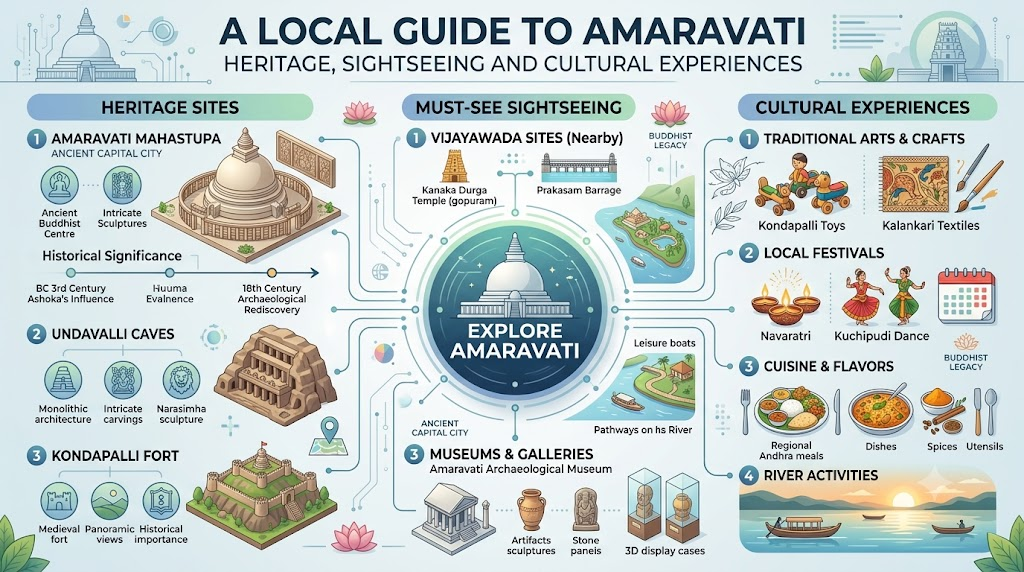
The Mahachaitya, or Great Amaravati Stupa, is the historical centerpiece of the town. Founded during the reign of Emperor Ashoka in the 3rd century BCE and expanded under the Satavahanas, it once stood as one of the largest Buddhist stupas in India. Although centuries of weathering and 18th-century excavations dismantled much of its original brick-and-limestone dome, the preserved foundation, circular path, and reconstructed railing panels show the monumental scale of the complex. Walking around the base gives you an immediate sense of the site’s original grandeur.
Amaravati Archaeological Museum
Managed by the Archaeological Survey of India (ASI), this museum sits just a short walk from the Great Stupa. It houses an exceptional collection of original limestone medallions, sculpted friezes, and relic caskets retrieved during excavations. Highlights include detailed panels portraying scenes from the Jataka tales, depictions of contemporary river barges, and early Brahmi inscriptions. The museum provides critical visual context that helps visitors visualize how the ruined stupa looked in antiquity.
Dhyana Buddha Statue
Standing 125 feet tall on the banks of the Krishna River, the Dhyana Buddha is a striking modern addition to Amaravati’s landscape. Completed in recent years, the colossal seated figure rests on a multi-tiered museum building whose galleries display paintings, sculptures, and modern exhibits celebrating Buddhist philosophies. The surrounding landscaped gardens face the broad waters of the Krishna, making it a peaceful spot for visitors seeking quiet contemplation or an easy late-afternoon walk.
Amareswara Swamy Temple
Dedicated to Lord Shiva, the Sri Amareswara Swamy Temple is one of the five sacred Pancharama Kshetras of Andhra Pradesh. The temple features a towering white rajagopuram, an unusually tall marble lingam, and inscriptions dating back to the Chola, Vijayanagara, and Reddy dynasties. Situated directly beside the river ghats, the complex stays active from dawn onward with daily rituals, making it the focal point of local civic and religious life.
Dharanikota Fort Site
Located approximately two kilometers west of the main stupa, Dharanikota was the fortified urban settlement that supported the ancient port and religious institutions. While mostly low earthworks, moats, and structural remnants remain today, it offers archaeology enthusiasts an authentic look at ancient urban planning, defensive ramparts, and riverine trade access along the Krishna basin.
Things to Do in Amaravati
Sightseeing in Amaravati extends beyond standing before old stone structures; it involves engaging with the local river environment and nearby artisanal traditions.
+---------------------+-------------------------------+----------------+
| Activity            | Focus Area                    | Ideal Timing   |
+---------------------+-------------------------------+----------------+
| Heritage Walking    | Great Stupa & Dharanikota     | Early Morning  |
| Cultural Museum Tour| ASI Archaeological Museum     | Mid-Day        |
| Riverfront Walks    | Krishna River Ghats           | Late Afternoon |
| Temple Rituals      | Amareswara Swamy Complex      | Morning/Night  |
| Regional Food Trail | Local Andhra Tiffins & Meals  | Lunchtime      |
+---------------------+-------------------------------+----------------+
- Walk the Heritage Circuit: Begin at the Mahachaitya at opening time, study the carved panels in the ASI Museum, and continue west toward the Dharanikota ramparts on foot or via a local auto-rickshaw.
- Spend Time at the River Ghats: The stone steps leading down to the Krishna River near the Amareswara temple allow you to watch traditional morning ablutions, local ferry crossings, and sunset reflections over the water.
- Explore Andhra Culinary Traditions: Stop by modest roadside messes and local eateries near the temple bus stand for authentic regional meals. Specialties include fiery gongura pachadi, fresh avakaya pickles, steaming rice served with podi and ghee, and traditional breakfast plates like pesarattu and idli.
- Visit Nearby Weaving Centers: The broader Guntur district is celebrated for handloom cottons. Taking a short detour into neighboring villages lets you observe traditional warp-and-weft handloom techniques used to produce durable cotton sarees and dress materials.
Planning Your Itinerary: Day Trips and Weekend Stays
Because Amaravati is located near major transportation corridors, it accommodates both hurried day-trippers and travelers who prefer a slow, methodical pace.
One-Day Heritage Itinerary
- 8:30 AM – 10:30 AM: Arrive in Amaravati; explore the Great Stupa grounds while the morning air is cool.
- 10:45 AM – 12:30 PM: Visit the ASI Archaeological Museum to inspect original carvings and historic relic containers.
- 12:30 PM – 2:00 PM: Lunch at a local eatery near the town center, followed by a brief rest.
- 2:00 PM – 3:30 PM: Tour the Dhyana Buddha project and explore the thematic galleries within its base.
- 3:45 PM – 5:00 PM: Walk through the courtyards and shrines of the Sri Amareswara Swamy Temple.
- 5:00 PM – 6:00 PM: Relax along the Krishna River ghats before beginning your return journey toward Vijayawada or Guntur.
Two-Day Regional Heritage Tour
- Day 1: Complete the primary Amaravati circuit (Stupa, Museum, Dhyana Buddha, and Amareswara Temple) with a relaxed late-afternoon stop at Dharanikota. Stay overnight in Vijayawada or Guntur.
- Day 2: Expand your route across the river to visit the 5th-century rock-cut Undavalli Caves near Tadepalle, followed by a visit to the historic hilltop fortress of Kondapalli, known for its wooden toy-making community.
Events, Festivals, and Cultural Life
Amaravati’s calendar blends deep-rooted temple festivals with contemporary public celebrations hosted across the Krishna region.
- Maha Shivaratri: Celebrated with immense devotion at the Amareswara Swamy Temple around February or March. Thousands of pilgrims assemble for all-night vigils, sacred river baths, and temple darshans.
- Buddha Jayanti: Celebrated in April or May, this festival draws domestic and international visitors to the Dhyana Buddha complex and the stupa site for chants, meditation sessions, and lectures on early Buddhist philosophy.
- Karthika Masam: Observed throughout the lunar month of Karthika (October–November), during which the river ghats light up with earthen oil lamps, and pilgrims complete ritual baths at daybreak.
- Contemporary Cultural Programs: As infrastructure expands, open-air venues and regional centers occasionally host craft exhibitions, music gatherings, and literary meetups. Platforms like AmaravatiOrbit.com offer visibility into scheduled events, regional workshops, and seasonal exhibitions taking place across the district. Always confirm details with event coordinators before attending.
Practical Travel Information: When and How to Visit
Best Time to Visit
The plains of Coastal Andhra experience hot, humid summers from March through June, with temperatures often surpassing 40°C. The ideal window to plan your journey falls between October and February, when daytime temperatures moderate to comfortable levels, making outdoor walking enjoyable. Monsoon rains occur primarily between July and September, bringing lush greenery to the riverbanks, though heavy spells can occasionally disrupt outdoor itineraries.
How to Reach Amaravati
- By Air: The nearest commercial airfield is Vijayawada International Airport (VGA) at Gannavaram, situated roughly 55 to 65 kilometers away depending on your route. The airport operates frequent daily flights to Hyderabad, Bengaluru, Chennai, and other major Indian hubs. Taxis can be hired directly from the airport.
- By Train: The closest major railway junctions are Vijayawada Junction (BZA) and Guntur Junction (GNT). Both stations connect directly to all regions of India through express and superfast networks. From either station, Amaravati can be reached by road in 60 to 90 minutes.
- By Road: Amaravati is well connected by state highways. The Andhra Pradesh State Road Transport Corporation (APSRTC) runs regular bus services connecting Amaravati village to the Pandit Nehru Bus Station (PNBS) in Vijayawada and the NTR Bus Station in Guntur. Auto-rickshaws and private hire cars operate routinely across the area.
Common Travel Pitfalls to Avoid
- Rushing Through the Museum: The ASI Museum houses artifacts essential for visualizing the ruined stupa. Skipping it leaves your historical understanding incomplete.
- Ignoring Midday Heat: Even during cooler months, afternoon sun can be intense on open stone courtyards. Schedule outdoor stupa visits for early morning or late afternoon.
- Disregarding Temple Dress Protocols: When entering the Amareswara Temple, modest attire covering shoulders and knees is mandatory. Footwear must be deposited outside.
- Underestimating Local Transit Schedules: While local buses run frequently, services thin out after dusk. Confirm return bus timings or prearrange taxi pickups if you plan to stay past sunset.
Practical Tips / Key Takeaways
- Footwear Management: Wear slip-on shoes or comfortable sandals. You must remove your footwear at temples and historical monuments.
- Cash Considerations: While UPI and mobile payments work in most shops, carry a modest amount of physical currency for small ticket counters, ferry rides, and rural snack stands.
- Sun Preparation: Pack a broad-brimmed hat, sunglasses, and an umbrella to handle direct midday sun.
- Water & Hydration: Always keep a refillable water bottle handy; staying hydrated is essential in this climate.
- Photography Ethics: Verify photography guidelines before taking pictures inside active temple sanctums and specialized museum galleries.
10 FAQs
What is the best time of year to visit Amaravati?
The most pleasant period to explore Amaravati is between October and February. Winter temperatures remain moderate, making it comfortable to explore open-air archaeological ruins, temple grounds, and riverbank trails without the intense heat common during the summer months.
How far is Amaravati from Vijayawada and Guntur?
Amaravati is located approximately 40 kilometers from Vijayawada and around 35 kilometers from Guntur. Travel time by private car, taxi, or state transit bus usually takes between 60 and 90 minutes from either city.
Can Amaravati be covered in a single day?
Yes, a well-planned one-day itinerary easily covers the core landmarks, including the Great Stupa, the ASI Archaeological Museum, the Dhyana Buddha statue, and the Amareswara Swamy Temple, with time left over for a riverside walk.
Is photography permitted at the historical and religious sites?
Outdoor photography is generally allowed across the Great Stupa grounds and the Dhyana Buddha gardens. However, photography is restricted inside specific galleries of the ASI Museum and inside the inner sanctum of the Amareswara Swamy Temple.
What kind of clothing should I pack for Amaravati?
Light, breathable cotton clothing is best suited to the regional climate. Visitors should choose modest attire that covers shoulders and knees to comply with cultural expectations at religious landmarks like the Amareswara Swamy Temple.
What are the main Buddhist attractions to see in Amaravati?
The primary Buddhist attractions are the ancient Great Stupa (Mahachaitya) ruins, the ASI Archaeological Museum with its Satavahana-era limestone relief carvings, and the modern 125-foot Dhyana Buddha statue overlooking the river.
Are there good accommodation options in Amaravati village?
Accommodations inside Amaravati village are limited to modest guesthouses and pilgrim dormitories. Most travelers prefer to stay in Vijayawada or Guntur, both of which offer a wide selection of modern hotels, business suites, and dining options.
What regional dishes should visitors try while visiting?
Visitors should sample authentic Andhra meals served with steamed rice, clarified butter, gunpowders (podi), and regional chutneys like gongura pachadi. Classic breakfast items such as pesarattu with ginger chutney and crisp medu vada are widely available.
How do I discover current events and activities in the Amaravati region?
You can stay informed about local festivals, exhibitions, and regional cultural gatherings by checking regional community portals such as AmaravatiOrbit.com, consulting local newspaper cultural listings, or inquiring at regional tourism information desks.
Are there other major historical attractions located near Amaravati?
Yes, travelers can easily extend their trip to explore the 5th-century rock-cut Undavalli Caves near Tadepalle, the medieval hilltop fortifications at Kondapalli, and the historic Mangalagiri temple complex, all located within an hour’s drive.
Conclusion
Amaravati brings together ancient Buddhist philosophy, sacred river traditions, and contemporary civic development into a single accessible travel destination. Visiting its historic stupa, admiring ancient carvings in the museum, and watching the sun set over the Krishna River offers a grounded look at Andhra Pradesh’s deep cultural foundations. With smooth road connectivity from Guntur and Vijayawada, organizing an efficient trip requires only basic advance planning. For updated information on regional gatherings, cultural highlights, and local tourism initiatives, checking platforms like AmaravatiOrbit.com ensures you make the most of your journey through this historic riverfront region.
