Introduction
Imagine water traveling through pipes into your kitchen sink. If a pipe leaks or gets rusty, the water arrives dirty, late, or stops flowing entirely. Data pipelines inside modern companies work the same way. Raw facts and numbers travel across complex networks into dashboards and reports. When errors occur along the route, teams make decisions based on broken numbers. This is why teams rely on modern DataOps practices. DataOps brings automation, active testing, and team collaboration together to make data delivery smooth, dependable, and fast. Educational platforms like TheDataOps.org provide guidance for teams looking to master these operational workflows and build reliable systems.
What Is DataOps and How Does It Work
DataOps is a collaborative working method designed to improve how people build, test, and deliver data. Just as software engineers use DevOps to ship code without crashes, data teams use DataOps to keep data pipelines healthy. It combines three main ingredients: people, processes, and technology.
In many workplaces, data engineers, analysts, and system administrators work in separate rooms without talking. DataOps breaks down those walls so everyone works toward the same goal. It treats data not just as static records, but as a living product that requires careful maintenance from the moment it is collected to the moment someone reads it.
Core Principles of Agile Data Operations
DataOps borrows helpful ideas from Agile development and Lean manufacturing. Instead of waiting six months to build a massive, complicated system, teams build small parts and test them immediately.
- Continuous Collaboration: Everyone shares feedback early so problems are caught quickly.
- Continuous Delivery: Updates to data pipelines are delivered in small, regular steps.
- Continuous Testing: Automated checks run day and night to verify accuracy.
- Respect for Flow: Bottlenecks are removed so information moves without unnecessary delays.
A Day in the Life of a Pipeline
Consider a grocery store chain tracking inventory. Every night, cash registers send transaction logs to a central warehouse. In a traditional setup, if a cash register records a price as text instead of a number, the entire batch job crashes. The store manager arrives in the morning to find an empty dashboard.
In an automated system running clear operational rules, automated tests run immediately. The pipeline catches the single bad entry, routes it into an isolation table for review, and allows the remaining clean records to flow through. The store manager gets accurate morning reports right on time.
Technical Elements of Reliable Data Delivery
Behind every smooth pipeline sits a collection of automated tools and patterns. Modern teams do not move records by hand. They write instructions in code so computers handle the repetitive lifting reliably.
+------------------+      +-------------------+      +--------------------+
|  Source Data     | ---> | Automated Quality | ---> | Clean Storage &    |
|  (Apps, Logs)    |      | Checks & Tests    |      | Analytics Engines  |
+------------------+      +-------------------+      +--------------------+
                                    |
                                    v
                         +--------------------+
                         | Continuous Metrics |
                         | & Observability    |
                         +--------------------+
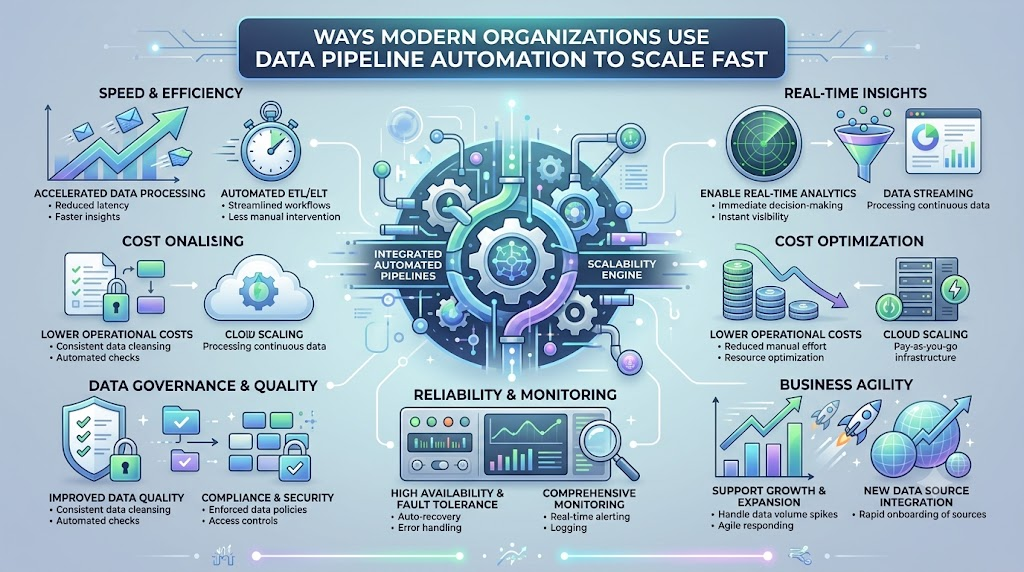
Data Pipeline Automation
Data pipeline automation replaces manual copy-and-paste routines with scheduled, repeatable software tasks. Tools such as Apache Airflow schedule jobs, manage dependencies, and restart failed steps automatically.
When one task finishes, the orchestrator triggers the next task without human intervention. This automation reduces human error, speeds up processing cycles, and ensures systems run reliably at any hour of the night.
Continuous Integration and Continuous Deployment
In software engineering, Continuous Integration and Continuous Deployment (CI/CD) means testing code changes automatically before putting them onto live servers. For data systems, CI/CD applies to database transformation logic, ingestion scripts, and infrastructure configurations.
When a developer updates a transformation script using Python or SQL, a version control system like Git triggers automated tests. The system verifies that the update will not break downstream reports before applying it to live production data.
Data Quality Management and Observability
Data quality management focuses on whether numbers are complete, unique, and formatted properly. Data observability takes this concept further by tracking the internal health of entire data ecosystems.
| Monitoring Area | What It Checks | Why It Matters |
| Freshness | Arrival timestamps of incoming batches | Alerts engineers when source files are delayed or missing |
| Volume | Row counts and overall record size | Catches sudden unexpected drops or duplications |
| Schema Health | Column names, data types, and structures | Prevents downstream jobs from failing on unexpected changes |
| Distribution | Value ranges, averages, and null frequencies | Identifies dirty, outlier, or invalid records early |
| Lineage | The end-to-end journey of every field | Shows exactly which reports are affected if a source breaks |
Practical Applications Across Modern Industries
Automating operations transforms how companies handle critical information every day. Real-time streaming platforms like Apache Kafka and distributed computing engines like Apache Spark process massive data volumes across numerous sectors:
- Healthcare: Hospitals combine patient monitor streams, pharmacy records, and lab results. Pipelines run constant checks so doctors review updated, validated medical records without system delays.
- Financial Services: Banks track millions of credit card transactions per minute. Automated validation algorithms spot fraudulent spending patterns instantly while safely routing valid charges.
- Retail Supply Chains: Global retailers monitor shipping container locations and regional warehouse supplies. Operations teams redirect deliveries before store shelves run out of high-demand goods.
Common Challenges and How Teams Solve Them
Adopting modern data practices takes time and intentional effort. Teams frequently encounter hurdles during the transition from legacy setups.
- Siloed Communication: Data scientists and infrastructure engineers often use different vocabulary. Teams solve this by creating shared documentation and adopting cross-functional daily standup meetings.
- Legacy Technical Debt: Older databases often lack automated testing interfaces. Organizations address this by wrapping older tables in automated validation layers before migrating to modern cloud data warehouses.
- Alert Fatigue: Setting up too many alerts can overwhelm engineers with minor notifications. Teams fix this by tuning thresholds to notify staff only when business-critical metrics drift outside normal ranges.
Developing Skills as a DataOps Professional
As organizations expand their reliance on machine learning and analytics, technical professionals who understand operational pipelines are in high demand. A DataOps Engineer acts as the bridge connecting data builders with production infrastructure.
Developing practical experience with Python, Linux environments, container orchestration like Kubernetes, and continuous integration engines forms a strong foundation. Comprehensive training courses, professional certifications, and community resources on platforms such as TheDataOps.org help practitioners gain structured expertise in automation, pipeline architecture, and enterprise data operations.
Frequently Asked Questions
What is the primary difference between DevOps and DataOps?
DevOps focuses on building, testing, and releasing software applications smoothly. DataOps borrows those same continuous delivery concepts but applies them specifically to data pipelines, changing schemas, data quality verification, and dynamic analytical outputs.
Why is data observability necessary if automated tests already exist?
Automated unit tests check whether pipeline code runs correctly against known criteria during deployment. Data observability continuously monitors the live data flowing through those pipelines in real time, detecting unpredictable shifts such as silent schema updates, missing values, or pipeline stalls.
Which core tools do teams use to automate pipeline workflows?
Teams regularly rely on workflow orchestrators like Apache Airflow, distributed processing frameworks like Apache Spark, message streaming platforms like Apache Kafka, container managers like Kubernetes, and visualization dashboards like Grafana.
What steps can a beginner take to start learning DataOps?
Beginners can start by learning basic programming in Python, writing SQL queries, and understanding how Git version control works. From there, practicing automated testing, reading foundational tutorials, and exploring resources on platforms like TheDataOps.org will build practical knowledge.
Final Thoughts
Treating data as an unmanaged byproduct leads to broken reports, slow decisions, and stressed engineering teams. DataOps provides a structured path forward by combining automation, thorough testing, and steady collaboration across every stage of the data lifecycle.
When pipelines run smoothly, analysts spend their days discovering valuable insights rather than fixing broken scripts. For data engineers, cloud architects, and technology leaders looking to enhance their operations, adopting reliable operational standards creates dependable systems that organizations can trust. Educational portals like TheDataOps.org continue to support technical communities by providing learning materials to build, scale, and maintain modern data architectures.
