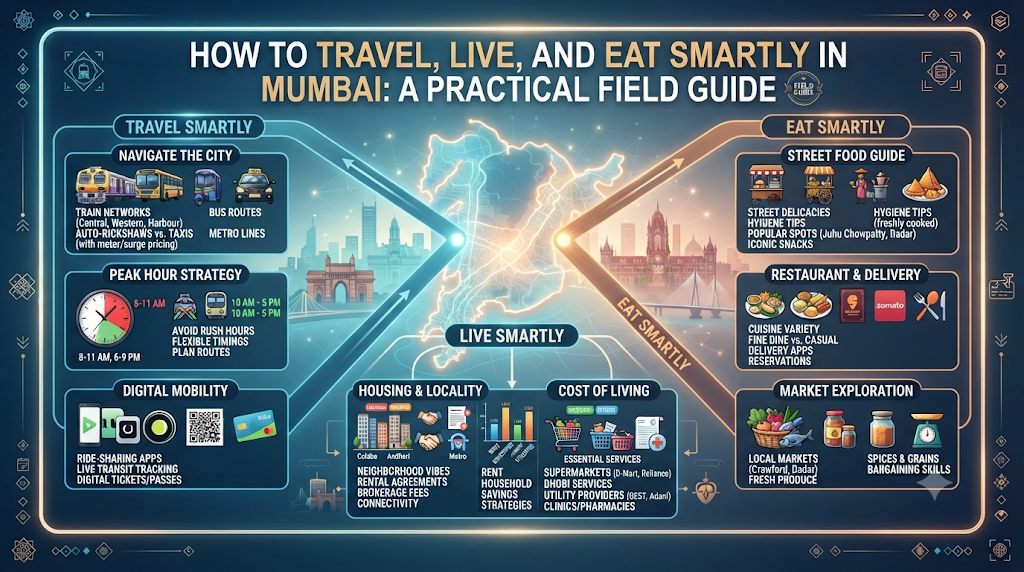
Landing in Mumbai for the first time feels a lot like stepping onto a moving treadmill—everyone around you seems to know the exact speed, direction, and rhythm, while you are still figuring out where to put your bag. Yet beneath that busy surface sits a surprisingly logical city built around three rail corridors, coastal neighbourhoods, and corner food stalls. Starting with a clear Mumbai local train guide turns that initial rush into calm, confident navigation from your very first day.
At MumbaiOrbit, we bring together practical city insights and everyday community knowledge so newcomers, travelers, and residents can find clear answers without guesswork. Written from a hands-on field perspective, this manual walks through local trains, underground metro travel, residential hubs, a smart three-day sightseeing loop, street snacks, bazaars, weekend escapes, and small-business essentials.
How Mumbai’s Geography Shapes Every Trip You Take
Mumbai sits on a long, narrow coastal strip pointing south into the Arabian Sea. Financial offices, historic monuments, and government landmarks cluster heavily near the southern tip, while residential suburbs spread northward and eastward across creeks into Thane and Navi Mumbai. Because north-south road traffic moves slowly during office hours, rail transit is the city’s true lifeline.
The Three Suburban Rail Corridors at a Glance
Three main railway arteries carry millions of commuters daily:
- Western Railway: Runs along the western shoreline from Churchgate and Mumbai Central through Dadar, Bandra, Andheri, Goregaon, and Borivali toward Virar.
- Central Railway: Travels from Chhatrapati Shivaji Maharaj Terminus (CSMT) through Dadar, Kurla, Ghatkopar, and Thane toward Kalyan, Kasara, and Karjat.
- Harbour Line: Connects CSMT with Navi Mumbai centres like Vashi and Panvel, while also offering cross-line links toward Bandra and Goregaon.
Underground Transit: Mumbai Metro Line 3
Elevated and underground metro lines now complement the surface railways. Anyone looking up a Mumbai Metro Line 3 guide will see how the underground Aqua Line links southern hubs like Cuffe Parade and Colaba with Bandra Kurla Complex (BKC), the airport belt, and SEEPZ in the north. It gives riders an air-conditioned path underneath congested roads. Because station phases, operating hours, and ticketing methods evolve, check official Mumbai Metro Rail Corporation (MMRC) updates before planning a tight connection.
| Transport Choice | Where It Works Best | Smart Habit on the Ground |
|---|---|---|
| Mumbai Local Trains | Long north-south journeys and fast links into Thane or Navi Mumbai | Check whether your service is Fast or Slow before stepping aboard |
| Mumbai Metro (incl. Line 3) | Air-conditioned travel along busy commercial and airport routes | Verify open stations and interchange walkways on official metro portals |
| BEST Buses, Taxis & Autos | Short neighbourhood hops, seafronts, and last-mile connections | Black-and-yellow taxis serve South Mumbai; auto-rickshaws operate in the suburbs |
Six Simple Steps for Riding a Mumbai Local Train
Following a practical Mumbai local train guide keeps your first journey smooth and stress-free:
- Identify Your Line and Junction: Confirm whether your origin and destination sit on the same corridor or require switching trains at Dadar or Kurla.
- Distinguish Fast From Slow Services: Slow trains stop at every station along the track; Fast trains skip smaller intermediate halts to cover distance quickly.
- Read the Overhead Platform Indicator: Station boards show the train’s final stop, coach count, and an
F(Fast) orS(Slow) marker. - Buy Your Ticket Before Entering the Platform: Purchase a valid journey ticket or pass via station counters, ATVM machines, or official mobile ticketing apps first.
- Check Coach Labels Near the Doors: Watch for painted signs marking ladies’ compartments, senior citizen sections, and first-class carriages.
- Move Toward the Exit One Stop Early: Trains pause briefly at busy platforms, so position yourself near the door before your destination arrives.
Picking Where to Live: Best Areas to Live in Mumbai
When newcomers compare the best areas to live in Mumbai, one practical rule beats every glossy brochure: choose a home along the same rail or metro corridor as your workplace or college. Saving an hour of daily commuting transforms your routine.
- South Mumbai (Colaba, Fort, Worli, Lower Parel): Close to southern business districts, cultural venues, and seafronts, mixing older heritage buildings with modern towers at higher rental budgets.
- Western Suburbs (Bandra, Khar, Santacruz, Andheri): Popular with young professionals, media workers, and students thanks to strong Western Line and Metro access, cafés, and lively neighbourhood streets.
- Central Pockets (Dadar, Matunga, Sion, Powai): Dadar and Matunga sit right where Western and Central railways meet alongside tree-lined residential lanes, while Powai offers a lakefront setting near tech parks and educational campuses.
- Thane & Navi Mumbai (Vashi, Nerul, Kharghar): Known for wider roads, planned sectors, and modern gated complexes—ideal if you work nearby or do not mind a longer daily rail commute.
Before signing any lease, visit the street after dark, verify building water supply hours and mobile reception inside the flat, and test your exact morning commute.
Sightseeing Without Traffic Burnout: Places to Visit and a 3-Day Plan
Mumbai rewards travelers who group places to visit in Mumbai by geographic zone instead of zig-zagging across the city in traffic.
A Balanced Mumbai 3 Day Itinerary
Treat this Mumbai 3 day itinerary as an adaptable blueprint (checking opening times and weekly holidays before heading out):
- Day 1 — South Mumbai Heritage & Coastline: Stroll past historic stone buildings around Horniman Circle and Kala Ghoda in the morning, explore a museum or gallery after lunch, and watch evening lights curve along Marine Drive or Girgaon Chowpatty.
- Day 2 — Bandra Lanes, Shopping & Sea Breeze: Spend the morning wandering Bandra’s quieter residential lanes and bakeries, browse shops along Hill Road and Linking Road in the afternoon, and catch sunset near Bandstand or Juhu Beach.
- Day 3 — Morning Markets & Neighbourhood Flavour: Start early at a bustling flower or spice bazaar, sample classic Mumbai street snacks in a busy food lane, and visit a local park or cultural landmark before wrapping up.
Local Flavours, Bazaars, and Easy Weekend Escapes
Where to Sample the Best Street Food in Mumbai
Tasting the best street food in Mumbai is part of everyday life here—from crisp vada pav straight out of the fryer and tangy sev puri to buttery pav bhaji, bun maska with Irani chai, and Maharashtrian staples like misal pav or sabudana vada. Choose busy stalls with brisk customer turnover, order piping-hot food, and stick to sealed drinking water.
Exploring Shopping Markets in Mumbai
From street bargains to traditional wholesale lanes, shopping markets in Mumbai suit every style:
- Colaba Causeway: Open-air stalls lined with jewellery, bags, sunglasses, books, and casual wear close to South Mumbai landmarks.
- Linking Road & Hill Road (Bandra): Popular stretches for footwear, everyday fashion, and street-style finds.
- Crawford Market & Mangaldas/Zaveri Bazaar: Historic wholesale and retail lanes packed with spices, dry fruits, fabrics, and household goods.
- Dadar West Market: Energetic neighbourhood hub right outside the station for fresh flowers, produce, and festive essentials.
Easy Weekend Getaways From Mumbai
When you crave quiet hills or open beaches, several weekend getaways from Mumbai lie within a few hours’ travel:
- Lonavala & Khandala: Popular hill towns in the Sahyadri range known for misty viewpoints, monsoon waterfalls, and local chikki.
- Alibaug: A coastal escape reached by ferry or road, offering sandy shores, historic sea forts, and relaxed homestays.
- Matheran & Karjat: Great for car-free forest trails in Matheran or riverside stays and trekking around Karjat.
- Igatpuri & Nashik: Scenic hillside drives and vineyard visits northeast along the Central corridor.
Launching Locally: How to Start a Small Business in Mumbai
Mumbai’s dense neighbourhoods create steady demand for practical everyday services, yet high commercial rents punish rushed decisions. If you are exploring how to start a small business in Mumbai, take a lean, step-by-step approach:
- Focus on a Clear Everyday Need: Solve repeat local problems—such as nutritious office tiffins, specialty tea and snacks, home appliance repair, tutoring, or B2B digital support.
- Test Demand Before Heavy Fixed Rent: Validate orders via home kitchens, weekend pop-ups, or online channels before signing long commercial leases with large security deposits.
- Calculate Full Monthly Cash Flow: Account for rent, deposits, staff wages, utilities, packaging, and at least four to six months of operating cushion.
- Complete Official Registrations Properly: Verify required registrations—such as Udyam (MSME) registration, GST registration where applicable, and local municipal Shop & Establishment or FSSAI food licenses—through official government portals.
- Choose Location by Footfall and Delivery Reach: A busy side lane two minutes from a railway station often delivers strong daily walk-ins at a fraction of main-road retail rent.
Everyday City Habits and the MumbaiOrbit Community
- Work Around Rush-Hour Waves: Morning trains heading south (roughly 8:30–10:30 AM) and evening trains heading north (roughly 5:30–8:00 PM) get heavily crowded; shifting travel by thirty minutes makes a noticeable difference.
- Stay Ready for Monsoon Rain (June–September): Carry compact rain gear, build extra buffer time into commutes during downpours, and check rail or civic updates when waterlogging warnings appear.
- Pair UPI With Small Currency Notes: Digital UPI works almost everywhere—from corner tea stalls to taxis—while small notes remain handy for quick change.
On MumbaiOrbit, you can explore more city guides and join the Mumbai community forum to swap real local tips—whether you are checking commute routes in Trains & Transport, comparing flats in Housing, hunting for snack spots in Khau Galli, planning regional trips in Maharashtra Matters, or asking everyday questions in Ask Mumbai.
Frequently Asked Questions (FAQs)
1. What is the single most useful rule in a Mumbai local train guide?
Always check whether your train is a Fast or Slow service and verify its final destination on the platform indicator before boarding, since Fast trains skip several smaller stations.
2. How do Mumbai’s three main suburban railway lines divide the city?
The Western Railway serves western coastal suburbs from Churchgate toward Virar, the Central Railway runs from CSMT through Thane toward Kalyan, and the Harbour Line connects CSMT with Navi Mumbai and parts of the western corridor.
3. How does a Mumbai Metro Line 3 guide help commuters and visitors?
Mumbai Metro Line 3 (the Aqua Line) offers an underground, air-conditioned corridor linking South Mumbai hubs toward BKC, the airport zone, and northern suburbs; always check official MMRC updates for active stations and timings.
4. Which places to visit in Mumbai fit best into a short visit?
Prioritize South Mumbai heritage precincts and Marine Drive, Bandra’s coastal promenades and shopping streets, bustling bazaars like Colaba Causeway or Crawford Market, and beaches such as Juhu or Girgaon Chowpatty.
5. Is a Mumbai 3 day itinerary enough to explore the city?
Yes—three well-paced days cover South Mumbai landmarks and coastline on day one, Bandra and the western suburbs on day two, and local bazaars, food lanes, and cultural spots on day three.
6. How can newcomers pick among the best areas to live in Mumbai?
Match your neighbourhood to your daily commute line and budget: Bandra, Santacruz, and Andheri suit western-line commuters, Dadar and Matunga offer central access across lines, and Thane or Navi Mumbai offer larger residential complexes.
7. Where can visitors safely try the best street food in Mumbai?
Look for busy, high-turnover stalls and local khau gallis, order freshly cooked hot dishes like vada pav or pav bhaji, and stick to sealed bottled or filtered water.
8. Which shopping markets in Mumbai offer the best mix of variety and bargains?
Colaba Causeway, Linking Road and Hill Road in Bandra, Crawford Market, and Dadar West Market are top stops for clothing, accessories, spices, flowers, and everyday goods.
9. What are easy weekend getaways from Mumbai?
Lonavala, Khandala, Alibaug, Matheran, and Karjat are popular short escapes reachable within a few hours by road, train, or ferry depending on the season.
10. What is a smart first step when learning how to start a small business in Mumbai?
Validate customer demand with low upfront rent commitments, budget full operating costs carefully, and complete applicable registrations like Udyam, GST, and local municipal licenses via official portals.
11. How can a Mumbai community forum help newcomers settle in faster?
Posting specific questions in focused categories like Ask Mumbai, Trains & Transport, or Housing on MumbaiOrbit lets you exchange practical advice with people familiar with everyday Mumbai life.
Conclusion
Mumbai feels intense at first glance, yet its daily rhythm becomes remarkably clear once you understand how the suburban railways, underground metro, and neighbourhoods connect. Planning trips around Fast and Slow trains, choosing a home along your transit corridor, exploring bazaars and street food smartly, and pacing travel around rush hours or monsoon rain will make every day in the city smoother. Visit MumbaiOrbit to read more local guides and connect with fellow residents, travelers, and newcomers across Mumbai.
