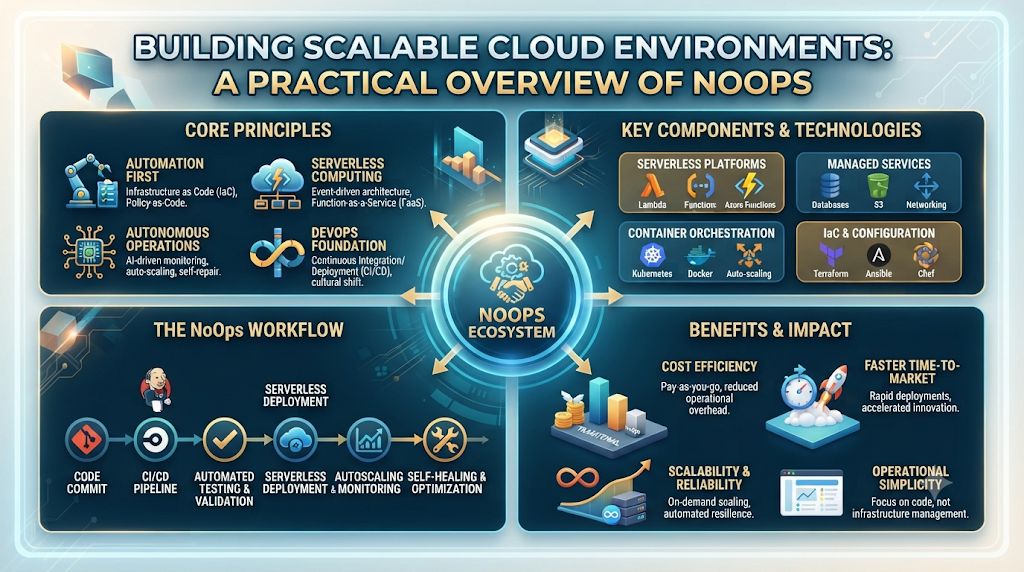
You sit at your desk late at night, staring at a flashing alert screen. Another routine server update failed, and you have to fix it by hand. Hours slip away on repetitive tasks that feel like a waste of your actual skills. Many IT professionals face this daily loop of manual chores and tired systems. You want a better way to handle cloud workloads without losing your mind. NoOpsSchool offers a clear path to learn modern automation and build resilient platforms.
Overview of NoOpsSchool
NoOpsSchool acts as a specialized IT education, certification, and consulting platform focused on modern software delivery. It serves DevOps engineers, cloud architects, platform engineers, software developers, system administrators, and IT managers. The platform also helps organizations that want to reduce manual work through automation. It is based in India and serves an international English-speaking technical audience through online training and professional services. Its main offering combines training courses, professional certification programs, educational resources, and practical guidance for adopting automated IT operations.
At a Glance: Learners vs. Organizations
This quick overview compares the two main groups that use the platform. It highlights how the offerings differ for individual learners and teams.
| Area | For Learners and Professionals | For Organizations |
|---|---|---|
| Main purpose | Build skills and earn certificates | Reduce manual work with automation |
| What the site offers | Training courses and study tracks | Consulting and freelance access |
| Skills and topics | Cloud tools and automation practices | Operational assessments and strategy |
| Practical focus | Hands-on labs and real scenarios | Infrastructure and CI/CD setup |
| Next step | Enroll in a learning track | Request professional services |
The table above shows how the site splits its focus between personal growth and team support. You can pick the path that matches your current goal.
Part One: Learning NoOps, From the Basics to Certification
What is NoOps? A plain-language explanation
Many engineers search for what is NoOps when they want lighter workflows. In plain words, NoOps aims to automate operational work so teams spend less time on manual tasks. It relies on smart code and scripts to manage servers and networks. This lets you focus on building features rather than fixing routine bugs.
NoOps vs DevOps: one way to look at the difference
People often compare NoOps vs DevOps to understand how team roles shift over time. One way to look at it is that DevOps brings development and operations teams together, while NoOps automates the routine tasks they share. These two ideas are closely related, and real teams often use parts of both. Always remember that human oversight and accountability remain important in any automated setup.
Who NoOpsSchool is for: engineers, architects, administrators, developers, and IT managers
Technical roles change fast as cloud systems grow more complex. This platform serves anyone who builds, runs, or manages modern software. Software developers and system administrators learn how to hand off routine chores to smart scripts. IT managers also find guidance on how to lead automated teams effectively.
NoOps training courses and what they cover
A good NoOps training course helps you master modern cloud tools step by step. Course content covers infrastructure as code, cloud-native computing, Kubernetes, Docker, Terraform, GitOps, CI/CD automation, serverless architecture, observability, and AI-powered operations. Infrastructure as code lets you set up servers using text files instead of manual clicks. Cloud-native computing means building apps designed to run smoothly in modern cloud environments. Observability is the ability to monitor system health through logs and metrics. Serverless architecture lets you run code without managing underlying servers. AIOps means using artificial intelligence to spot and fix IT problems.
Hands-on labs, real-world scenarios, and self-healing infrastructure
Theory alone is never enough when you manage live cloud environments. Training materials stress hands-on labs, real-world automation scenarios, self-healing infrastructure, automated incident response, and practical platform engineering concepts. Self-healing infrastructure is a system that spots a failure and fixes itself without human help. Automated incident response means the system alerts the right tools to react to sudden errors. Practice these labs to build real confidence before you take your exams.
NoOps automation tools and technologies you will meet
Learning modern workflows means getting familiar with standard software utilities. The site covers key NoOps automation tools to help you build reliable systems. Kubernetes is a tool for running containerized apps across many servers. Docker helps package software into neat containers that run anywhere. Terraform lets you create cloud resources using simple text scripts. GitOps is a way to manage infrastructure using code stored in version control systems. CI/CD automation helps build, test, and deploy code updates automatically.
NoOps certification tracks
Earning a formal credential can help validate your new technical skills. The platform offers certification tracks that match its learning programs. These paths guide you through structured lessons and practice tests. Review the available options to find the track that fits your career path.
The NoOps Engineer track
Day-to-day automation requires strong practical skills with cloud tools. The NoOps engineer certification is designed for professionals who want to build and run automated environments. You learn how to write deployment scripts and set up monitoring tools. Take this track if you love hands-on technical configuration.
The NoOps Architect track
Large systems need careful planning before anyone writes code. The NoOps architect training helps you design secure and scalable cloud platforms. You learn how different automation pieces fit together across a whole organization. This path suits senior staff who shape long-term technical strategy.
The NoOps Manager track
Leading technical teams through an automation shift takes special insight. The NoOps manager certification focuses on leadership and operational strategy. You learn how to guide staff as they move away from manual server tasks. This program helps leaders measure the real value of automated workflows.
The NoOps Professional track
Some roles require a broad understanding of all automation layers. The Professional track covers general concepts for varied technical backgrounds. It helps you connect development goals with automated operations. Use this option if your daily work touches many different technical areas.
Which Offering Is for You? A Quick Guide
This guide helps you match your needs to the right part of the platform. It outlines what each service provides for users.
| Offering | What It Covers | Who It Helps |
|---|---|---|
| Training courses | Cloud topics and automation skills | Learners building technical skills |
| Certification tracks | Structured role-based exams | Professionals validating expertise |
| Educational resources | Guides and concept articles | Anyone exploring automation |
| Consulting services | Operational assessments and strategy | Organizations improving workflows |
| Freelance professionals | Access to vetted technical experts | Teams needing extra project help |
Confirm current details on the site before you decide on any course or service.
Part Two: For Organizations, From Assessment to Execution
NoOps consulting services: what the site advertises
Companies often struggle to remove manual bottlenecks from their daily workflows. The site advertises NoOps consulting services to help teams plan their automation journey. Consultants work with your staff to review current processes and suggest better methods. Always talk to the platform team to confirm project terms and availability.
Assessments and automation strategy
A clear plan prevents wasted time during a technical upgrade. Consultants help you review your current operational workload and find repetitive tasks. They then design a custom automation strategy for your cloud infrastructure. This initial step keeps your team aligned on common goals.
Cloud-native modernization and infrastructure provisioning
Old software systems can slow down a growing business. The platform helps teams update their legacy apps to run in modern cloud environments. Infrastructure provisioning services set up your servers and databases using automated scripts. This approach reduces human errors during system setup.
CI/CD implementation, AIOps integration, and security automation
Modern software delivery requires fast and safe update pipelines. CI/CD implementation helps your team ship code updates smoothly. AIOps integration adds smart monitoring to spot issues before users notice them. Security automation checks your code for flaws during every build step.
Access to freelance professionals: what the site advertises
Sometimes your internal team needs an extra pair of hands for a big project. The freelancer section focuses on connecting organizations with expertise in Terraform, Kubernetes, cloud platforms, automated monitoring, and self-healing systems. You can bring in outside experts for specific technical tasks. Confirm contractor details directly through the platform channels.
Realistic Expectations: What NoOps Does and Does Not Do
Automation can transform how you handle daily IT chores, but it has clear limits. NoOps reduces operational workload by taking over repetitive tasks like server patches and log sorting. It does not remove accountability or human oversight from your team. People still need to design systems, set safety rules, and review critical alerts. Setting realistic expectations helps your organization avoid false hopes about magic solutions. Approach automation as a tool to help your staff work smarter, not as a replacement for human judgment.
Tips for Learners and Organizations
For learners:
- Start with the basic concepts before moving on to complex automation tools.
- Pick the role track that matches your current daily job responsibilities.
- Practice your skills regularly in hands-on labs to build real confidence.
- Learn one technical topic at a time to avoid feeling overwhelmed.
For organizations:
- Assess your current manual work before planning any major automation project.
- Set realistic goals for what automated systems can achieve for your team.
- Keep humans in the loop to review critical security and system alerts.
- Confirm all service details with the site before you start any project.
A Hypothetical Scenario
Imagine a mid-sized software company struggling with frequent deployment delays. The IT manager reviews the team’s manual work and decides to seek outside help. They look at the advertised NoOps consulting services to plan a cloud modernization strategy. The team learns new automation skills through online training courses. After a few months, they deploy updates faster and spend less time fixing routine server errors.
Frequently Asked Questions About NoOpsSchool
What is the platform and who does it serve? It is an IT education and consulting platform based in India. It serves technical professionals and organizations worldwide.
What does NoOps mean in plain words? It means using automation to handle routine IT tasks so teams can focus on building software.
How do NoOps and DevOps relate? DevOps unites development and operations, while NoOps automates the routine tasks they share.
Does NoOps remove the need for people? No, human oversight and accountability remain essential for every automated system.
Which roles have training programs? Programs exist for Engineers, Architects, Managers, and Professionals.
What do the training courses cover? They cover infrastructure as code, cloud tools, container systems, and automated workflows.
What are hands-on labs and real-world scenarios? They are practical exercises that let you practice automation tasks in realistic settings.
Which tools and topics appear in the curriculum? The site covers Kubernetes, Docker, Terraform, GitOps, and CI/CD pipelines.
What do self-healing infrastructure and automated incident response mean? They are systems that detect faults and fix or report them without human help.
How do certification tracks match the learning programs? Each main learning program has a matching certification track to test your knowledge.
Who should consider a manager-level track? IT managers and team leaders who want to guide staff through automation shifts.
What consulting services does the site advertise? It offers operational assessments, cloud modernization, and automation strategy planning.
What does the freelancer section focus on? It connects teams with experts in Terraform, Kubernetes, and monitoring tools.
How can organizations start using these services? They should review the service details and confirm arrangements directly with the platform.
What educational resources are offered? The site provides articles, guides, and practical advice on modern IT operations.
Final Thoughts
Adopting modern automation practices can change how you view everyday IT work. By cutting down repetitive chores, you free up time for creative problem-solving. NoOpsSchool provides the learning paths and professional services to support this transition. Take your time to explore the resources and build a more resilient technical future.
