Introduction
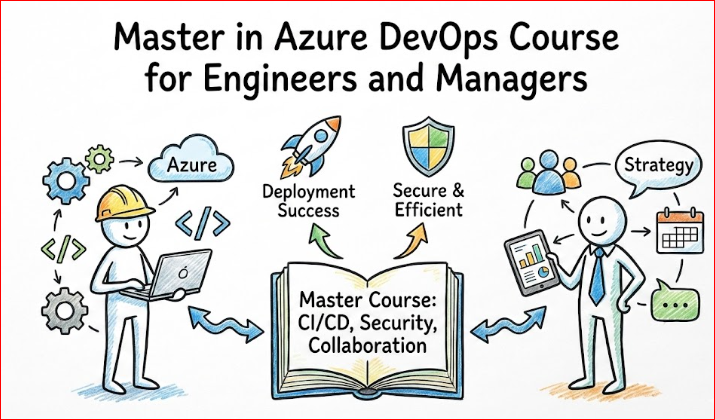
The software industry has undergone a massive transformation over the last two decades. We moved from physical servers and “throwing code over the wall” to a world where infrastructure is code and deployments happen hundreds of times a day. In my journey through these shifts, I’ve seen that the most successful organizations aren’t just the ones with the best developers, but the ones with the most fluid delivery pipelines. Azure DevOps has emerged as the premier choice for enterprises because it integrates everything—planning, coding, testing, and deploying—into one cohesive ecosystem. This guide is your roadmap to achieving a Master in Azure DevOps, a certification that signals you aren’t just a user of the tool, but an architect of the process.
The Azure DevOps Certification Landscape
Before reaching “Master” status, you must understand the hierarchy of skills. The Azure ecosystem is broad, and mastering it requires a layered approach. You cannot build a high-performance pipeline if you do not understand the underlying infrastructure or the fundamental cloud principles.
Azure Certification Matrix
| Certification Track | Level | Who it’s For | Prerequisites | Skills Covered | Recommended Order |
| Azure Fundamentals | Foundational | Beginners, Managers, Sales | None | Cloud concepts, Security, Privacy, Pricing | 1 |
| Azure Administrator | Associate | SysAdmins, Support Engineers | AZ-900 (Recommended) | Identity, Storage, Compute, Virtual Networks | 2 |
| Azure DevOps Engineer | Expert | DevOps/SRE Engineers | AZ-104 or AZ-204 | CI/CD, Instrumentation, Security, Site Reliability | 3 |
| Master in Azure DevOps | Master | Lead Engineers, Architects | Experience in Azure | End-to-end Master-level Lifecycle & Strategy | 4 |
Deep Dive: Master in Azure DevOps Certification
What it is
This is an elite certification program that encompasses the entire Microsoft DevOps ecosystem. It is designed to take a candidate through the foundational aspects of Azure (AZ-900), the operational rigors of Administration (AZ-104), and the automation mastery of DevOps (AZ-400). It focuses on the “Three Ways of DevOps”: Flow, Feedback, and Continuous Learning, applied specifically to the Azure Cloud.
Who should take it
- Software Engineers: If you are tired of your code breaking in production, you need this to understand how to build safety nets into your delivery.
- Lead Engineers & Architects: For those responsible for designing the delivery systems for multiple teams.
- IT Managers: If you manage technical teams, you need to understand the modern “factory” of software to set realistic goals and budgets.
- Freshers with Ambition: For newcomers who want to bypass “junior” roles by demonstrating a deep, structured understanding of cloud automation.
Skills you’ll gain
- Strategic Planning: Learning to use Azure Boards not just for tasks, but for portfolio management and value stream mapping.
- Advanced Version Control: Mastering Git branching strategies (GitFlow, Trunk-based) within Azure Repos to support high-frequency releases.
- Enterprise CI/CD: Building YAML-based multi-stage pipelines that include manual approvals, automated testing, and multi-environment deployments.
- Infrastructure as Code (IaC): Using Terraform, Bicep, and ARM templates to ensure your environments are reproducible and version-controlled.
- Security & Governance: Implementing “Shift-Left” security by integrating secret management (Azure Key Vault) and compliance checks directly into the pipeline.
- Monitoring & Feedback: Setting up Application Insights and Azure Monitor to create a closed-loop system where production data informs the next development cycle.
Real-world projects you should be able to do after it
- The “Zero-to-Hero” Pipeline: Setup a project where pushing code to a Git repo triggers a build, runs unit tests, scans for security vulnerabilities, and deploys to a staging environment automatically.
- Self-Healing Infrastructure: Create a system where an Azure Monitor alert triggers a Logic App or a Function to restart a service or scale up a cluster without human intervention.
- Compliance as Code: Build a pipeline that automatically rejects any deployment that doesn’t meet corporate security standards (e.g., public ports being open).
- Blue-Green Deployment: Implement a release strategy for a high-traffic web app that allows for zero-downtime updates and instant rollbacks if a bug is detected.
Preparation plan
- 7–14 days (The “Fast Track”): This is for professionals already working daily in Azure. Focus purely on the delta—new features, complex YAML syntax, and high-level architectural questions.
- 30 days (The “Standard Path”): Spend 2 hours a day. Dedicate week 1 to Administration, week 2 to CI/CD labs, week 3 to Security and Monitoring, and week 4 to mock exams and strategy.
- 60 days (The “Comprehensive Path”): Best for those new to the cloud. Take your time to build projects from scratch. Spend the first 30 days just on Administration (AZ-104) before touching the DevOps tools.
Common mistakes
- Tool-First Thinking: Many people learn how to use the button but not why the process exists. DevOps is a culture first.
- Neglecting the “Ops” in DevOps: Engineers often focus on the build but forget about long-term monitoring, patching, and cost management of the infrastructure.
- Hardcoding Secrets: A common mistake is putting passwords or API keys in the YAML files or code. A Master professional always uses Key Vault.
- Ignoring Documentation: Not documenting the pipeline logic. If the person who built the pipeline leaves, the whole system should not become a “black box” that everyone is afraid to touch.
Best next certification after this
Option 1: Same Track (The Cloud Architect)
If you enjoy designing the entire blueprint of an enterprise ecosystem, moving into architecture is the logical next step.
- Certification: Azure Solutions Architect Expert (AZ-305)
- Focus: This moves you from the “how to build” (DevOps) to the “what to build” (Architecture). You will learn how to design identity, governance, data storage, and business continuity solutions across the entire Azure platform.
- Why it works: A Master in Azure DevOps who understands architecture is a “Full-Stack Architect”—someone who can not only design a system but also ensure it can be delivered and maintained automatically.
Option 2: Cross-Track (The Security Expert)
Security is no longer a separate phase; it is part of the daily pipeline. Specializing here makes you indispensable to high-security industries like Finance and Healthcare.
- Certification: DevSecOps Certified Professional (via DevSecOpsSchool)
- Focus: You will dive deep into automated security testing (SAST/DAST), container security (Trivy, Grype), and compliance-as-code.
- Why it works: Organizations are desperate for “Purple Team” engineers—those who understand the developer’s speed but have the security professional’s eye for risk.
Option 3: Leadership (The DevOps Lead/CTO)
If you are aiming for management, you need to stop looking at YAML files and start looking at business metrics and organizational culture.
- Certification: Master in DevOps Engineering (MDE)
- Focus: This program focuses on the “DORA metrics” (Deployment Frequency, Lead Time for Changes, etc.), Value Stream Mapping, and leading cultural transformations within large organizations.
- Why it works: It prepares you to handle the human side of DevOps—managing teams, breaking down silos, and proving the ROI of DevOps to the C-suite.
Choose Your Path: 6 Specialized Learning Paths
DevOps is no longer a single role; it has branched into specialized disciplines. Depending on your interest, you can pivot your Master-level skills into these areas:
- DevOps Path: The core path focusing on speed and quality of delivery.
- DevSecOps Path: Focusing on the “Security as Code” movement. You become the bridge between the security team and the developers.
- SRE (Site Reliability Engineering) Path: You focus on the “run” phase. You use software engineering to solve operations problems, focusing on availability and latency.
- AIOps/MLOps Path: Applying DevOps principles to Machine Learning. You manage the lifecycle of models, ensuring they are retrained and redeployed as data changes.
- DataOps Path: Focusing on the flow of data. You build automated pipelines for data warehouses and big data platforms like Azure Databricks.
- FinOps Path: The most recent evolution. You focus on “Cloud Economics”—ensuring the organization gets the most value for every dollar spent on Azure.
Role → Recommended Certifications Mapping
| Role | Recommended Certification Journey |
| DevOps Engineer | Master in Azure DevOps → Kubernetes Expert (CKA) |
| SRE | Master in Azure DevOps → SRE Certified Professional |
| Platform Engineer | Master in Azure DevOps → HashiCorp Certified: Terraform Associate |
| Cloud Engineer | Azure Administrator → Master in Azure DevOps |
| Security Engineer | Master in Azure DevOps → AZ-500 (Security Technologies) |
| Data Engineer | Azure Fundamentals → DataOps Certified → DP-203 |
| FinOps Practitioner | Azure Fundamentals → FinOps Certified Practitioner |
| Engineering Manager | Master in Azure DevOps (Overview) → Agile/Scrum Master |
Next Certifications to Take (Your Evolution)
After the Master in Azure DevOps, you must decide your next “peak” to climb:
- Option 1: Same Track (The Architect)
- AZ-305 (Solutions Architect): Move from building pipelines to designing the entire cloud footprint of a company.
- Option 2: Cross-Track (The Security Lead)
- DevSecOps School Certification: Focus on automated pen-testing, container security, and compliance.
- Option 3: Leadership (The Executive)
- Master in DevOps Engineering (MDE): This is for those moving into Director or CTO roles. It focuses on the business value of DevOps, metrics (DORA metrics), and organizational change.
Top Institutions for Master in Azure DevOps Training
Success in these exams often depends on the quality of the mentorship. Here are the top institutions that provide structured help:
- DevOpsSchool: They are the pioneers in this space. Their “Master” program is unique because it isn’t just a recording; it’s a live, interactive journey with consultants who work on these tools daily. They offer one of the most comprehensive lab environments in the industry.
- Cotocus: This institution is excellent for those who want specialized, high-end consulting-style training. They focus on the “architectural” side of DevOps, making them a favorite for senior engineers.
- Scmgalaxy: A massive repository of knowledge. They provide extensive free resources, community support, and deep-dive technical blogs that help you troubleshoot real-world issues that aren’t in the official textbooks.
- BestDevOps: They specialize in “Job Readiness.” If you are looking to switch jobs or move into a higher-paying bracket, their training is focused on the interview questions and scenarios you will actually face.
- DevSecOpsSchool: As the name suggests, they are the world leaders in security-integrated DevOps. If you want to master the security tools within Azure, this is your home.
- Sreschool: Dedicated to the discipline of Site Reliability Engineering. They help you master the “Ops” side—Service Level Objectives (SLOs), error budgets, and incident management.
- Aioppschool: The place to go if you want to integrate AI into your operations. They teach you how to use machine learning to predict outages before they happen.
- Dataopsschool: They bridge the gap between Data Science and DevOps. Essential for anyone working with Azure Synapse or Data Factory.
- Finopsschool: They provide the specialized training needed to manage massive cloud budgets. This is becoming one of the most high-demand skills in the corporate world.
FAQs (General)
1. How difficult is the Master in Azure DevOps?
It is a “Level 300-400” program. It assumes you are past the “what is a virtual machine” stage and are ready to discuss “how do I orchestrate a global deployment across 10 regions.”
2. Is there a specific order for the exams?
While you can take them in any order, I strongly recommend AZ-900 → AZ-104 → AZ-400. This builds your knowledge logically.
3. Does the Master program include hands-on labs?
Yes. In fact, 70% of the Master program is lab-based. You cannot “read” your way to mastery; you must build.
4. What is the average salary after this certification?
In India, a Master-certified professional can expect between ₹18L to ₹35L+ depending on experience. Globally, $140k – $180k is the standard for this skill set.
5. How much time should I dedicate daily?
Consistency is key. 1.5 to 2 hours of focused study (no phones, no distractions) is better than a 10-hour “cram session” on Sunday.
6. Do I need to be a programmer?
You need to be a “Scripter.” You don’t need to build complex software, but you must be comfortable with logic, variables, and loops in YAML or PowerShell.
7. Can I do this if my company uses AWS?
The principles of DevOps are the same. If you master Azure DevOps, you can transition to AWS or GCP very easily because the logic of CI/CD is universal.
8. What if I fail the exam?
The Master program at DevOpsSchool includes mentorship to help you identify your weak spots so you can clear it on the second attempt with confidence.
9. Is this certification recognized globally?
Yes, Azure is used by over 95% of Fortune 500 companies. This certification is a global currency.
10. How do I keep my skills updated?
The cloud changes every week. Follow the Scmgalaxy blog and the official Azure updates to stay on the cutting edge.
11. Does this cover Kubernetes?
Yes, the Master program includes a significant section on Azure Kubernetes Service (AKS) as it is the primary way modern apps are deployed.
12. Why choose this over a free YouTube course?
YouTube is great for “how-to,” but it doesn’t give you the “why,” the labs, the mentorship, or the official recognition that a Master program provides.
FAQs (Master in Azure DevOps Specific)
1. What makes the “Master” program different from the AZ-400 exam?
The AZ-400 is a single exam. The Master program is a holistic training that covers everything from foundational cloud to expert-level delivery, including administration.
2. Are there any live projects included?
Yes, the program typically concludes with a capstone project where you build a full CI/CD pipeline from scratch for a real-world application.
3. Who are the trainers?
The trainers are industry veterans—people who have spent years in the trenches of IT, not just professional teachers.
4. What is the validity of the Master certification?
While the industry evolves, the certification from DevOpsSchool provides lifelong access to the community and updated course materials.
5. Is job assistance provided?
Yes, the program includes resume reviews, LinkedIn profile optimization, and mock interviews to prepare you for the market.
6. Can I attend the training remotely?
Yes, the program is designed for working professionals and is conducted through high-quality live online sessions.
7. Is the curriculum updated for 2026?
Absolutely. The curriculum is updated every few months to include the latest features like GitHub Actions integration and new Azure security protocols.
8. What is the passing score for the internal assessments?
We aim for a 70% or higher on internal labs to ensure you are ready for the official Microsoft exams.
Testimonials
“I spent 15 years in traditional IT Operations. I was terrified of coding. The Master in Azure DevOps program broke it down so simply that I was building my own pipelines within a month. I’ve now doubled my salary and work for a top European bank.”
— Rajesh V., Infrastructure Architect
“As a manager, I needed to understand what my team was talking about. This program gave me the technical depth to lead with authority. I no longer just ‘hope’ for a release to work; I understand the metrics that prove it will.”
— Sarah Jenkins, Engineering Manager
Conclusion
Mastering Azure DevOps is more than just learning a suite of tools; it is about adopting a philosophy of relentless improvement and high-velocity delivery. In my journey through the tech industry, I have seen that the most valuable professionals are those who can bridge the gap between a developer’s code and a customer’s experience. The Master in Azure DevOps certification program is the definitive step for any engineer or manager who wants to lead this charge. It provides the structured path, the hands-on expertise, and the industry recognition needed to thrive in an increasingly cloud-native world. By completing this program, you aren’t just earning a credential—you are future-proofing your career and positioning yourself as an architect of the digital age.