1. Introduction & Overview
What are Industrial Cobots?
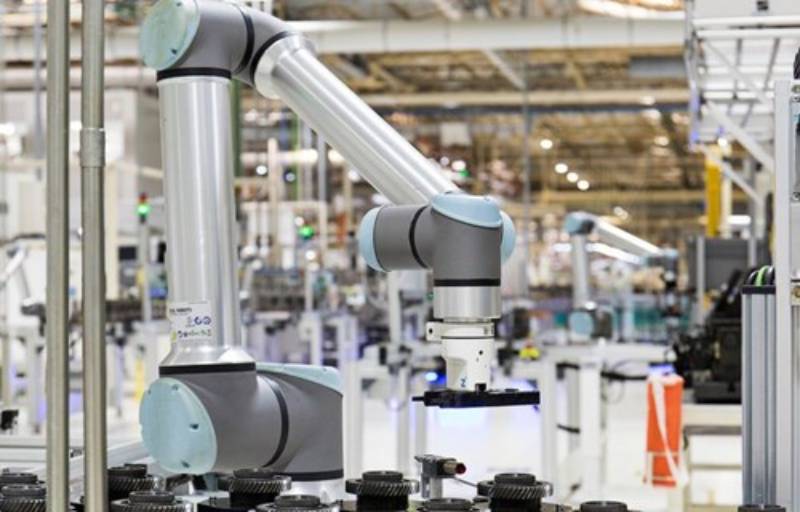
- Cobots (Collaborative Robots) are robots designed to work alongside humans safely, unlike traditional industrial robots that usually operate inside cages or restricted zones.
- Industrial Cobots specifically refer to cobots used in manufacturing, assembly lines, logistics, warehousing, and production facilities.
- They are equipped with sensors, AI-driven safety mechanisms, and flexible arms that allow direct collaboration without harming humans.
History or Background
- 1954: First industrial robot prototype designed (George Devol → “Unimate”).
- 1960s–1980s: Traditional robots dominated manufacturing (mainly automobile assembly lines). These robots were fast, precise, but unsafe for human proximity.
- 1990s: Rise of human-robot collaboration research → need for flexible, safe, and adaptive robots.
- 2008: Universal Robots (UR5) launched → first widely adopted industrial cobot.
- 2010s–2020s: Adoption across industries (electronics, packaging, healthcare, logistics).
- Now (2025): Cobots are integrated with RobotOps pipelines, cloud services, and CI/CD workflows to enable automation at scale.
Why is it Relevant in RobotOps?
- RobotOps (like DevOps but for robots) ensures continuous deployment, monitoring, and management of robotic systems.
- Industrial Cobots in RobotOps bring:
- Rapid deployment → new tasks updated via CI/CD pipelines.
- Scalability → easy integration into cloud orchestration tools.
- Safety-first automation → enabling human + robot collaboration without heavy reconfiguration.
- Data-driven operations → logs, telemetry, and anomaly detection feed back into RobotOps observability stack.
2. Core Concepts & Terminology
| Term | Definition |
|---|---|
| Cobot | A collaborative robot that works with humans safely. |
| End Effector | The tool attached at the end of a cobot arm (e.g., gripper, welder, screwdriver). |
| Force Limiting | Safety feature → cobot stops when excessive force is detected. |
| HRC (Human-Robot Collaboration) | The interaction between cobots and humans in shared workspaces. |
| Teach Pendant | Handheld device used to program cobots manually. |
| RobotOps Lifecycle | Continuous process of deploying, monitoring, updating, and securing robots via DevOps-like principles. |
How Cobots Fit into the RobotOps Lifecycle
- Development → Write robot tasks in YAML/ROS (Robot Operating System).
- CI/CD Pipelines → Automated testing of cobot motions & safety rules.
- Deployment → Push updates to cobot controllers via cloud or edge gateways.
- Monitoring → Collect real-time sensor data & logs into observability stack (Prometheus, Grafana).
- Incident Response → Auto-shutdown or safe-mode if anomaly detected.
- Continuous Improvement → Update motion planning models & AI safety parameters.
3. Architecture & How It Works
Components of Industrial Cobots
- Robot Arm (6-axis or more, flexible joints).
- Controller (embedded system running cobot OS / firmware).
- Sensors (force, torque, vision, proximity).
- End Effector (grippers, welding torch, suction cups, etc.).
- Safety Systems (force limiting, AI-driven motion planning).
- Integration Layer (ROS, MQTT, WebSockets for communication).
- Cloud / RobotOps Orchestration (GitHub Actions, Jenkins, Kubernetes).
Internal Workflow (Step-by-step)
- Task Assignment → Operator assigns workflow via RobotOps dashboard.
- Motion Planning → Controller computes safe paths.
- Execution → Cobot performs action while monitoring human presence.
- Feedback Loop → Sensors continuously update cobot + RobotOps monitoring.
- CI/CD Updates → RobotOps pipeline pushes new firmware or workflow.
Architecture Diagram (Described)
+---------------------+       +----------------------+
|  RobotOps Pipeline  | <---> |  Cloud Orchestration |
|  (CI/CD, GitOps)    |       |  (K8s, Jenkins, AWS) |
+---------+-----------+       +----------+-----------+
          |                             |
          v                             v
+---------------------+       +----------------------+
|  Edge Gateway       | <---> |  Cobot Controller    |
|  (ROS, MQTT broker) |       |  (Motion Planner)    |
+---------+-----------+       +----------+-----------+
          |                             |
          v                             v
+---------------------+       +----------------------+
|  Sensors + Cameras  |       |  Robot Arm + Effector|
+---------------------+       +----------------------+
Integration Points with CI/CD or Cloud
- CI/CD:
- GitHub Actions → deploy motion scripts.
- Jenkins → automated test of cobot paths.
- Cloud:
- AWS RoboMaker / Azure Robotics → simulation & deployment.
- Kubernetes → orchestrate multiple cobots.
- Observability:
- Prometheus + Grafana → monitor cobot health.
- ELK Stack → collect cobot audit logs.
4. Installation & Getting Started
Prerequisites
- Hardware: Industrial cobot (UR5, FANUC, KUKA, ABB).
- Software: ROS2, Python SDK, MQTT broker.
- RobotOps Tools: GitHub Actions, Jenkins, Docker, Kubernetes.
- Network: Secure VPN or factory LAN.
Hands-On Setup Guide (Beginner-Friendly)
- Install ROS2 on Linux machine:
sudo apt update
sudo apt install ros-humble-desktop
2. Connect Cobot Controller to ROS:
ros2 launch ur_bringup ur5.launch.py
3. Setup MQTT Broker for telemetry:
docker run -d --name mosquitto -p 1883:1883 eclipse-mosquitto
4. Integrate with GitHub Actions (.github/workflows/cobot.yml):
name: Deploy Cobot Workflow
on: [push]
jobs:
  deploy:
    runs-on: ubuntu-latest
    steps:
      - name: Checkout
        uses: actions/checkout@v3
      - name: Deploy to Cobot
        run: python deploy_cobot.py
5. Verify Deployment → Run test motion:
ros2 topic pub /ur5/joint_goal ...
5. Real-World Use Cases
- Automotive Manufacturing → Cobots handle welding, painting, screw-driving alongside humans.
- Electronics Assembly → Precision PCB placement + soldering.
- Warehousing & Logistics → Packing, sorting, palletizing with human workers.
- Healthcare & Pharma → Mixing chemicals, handling sterile equipment safely.
6. Benefits & Limitations
Key Advantages
- Safe for human collaboration.
- Flexible (no heavy reprogramming).
- Quick ROI for SMEs (small-medium enterprises).
- Cloud + RobotOps integration = scalability.
Limitations
- Lower payload compared to heavy industrial robots.
- Slower speed (due to safety constraints).
- Requires strict cybersecurity & compliance (risk of hijacking via IoT).
7. Best Practices & Recommendations
- Security Tips:
- Encrypt cobot-cloud communication.
- Role-based access in RobotOps pipelines.
- Performance:
- Use edge gateways to reduce latency.
- Apply anomaly detection for predictive maintenance.
- Compliance:
- ISO 10218 (robot safety).
- ISO/TS 15066 (cobot collaboration).
- Automation Ideas:
- Auto-update cobot tasks via GitOps.
- Integrate with digital twins for simulation before deployment.
8. Comparison with Alternatives
| Feature | Cobots | Traditional Robots |
|---|---|---|
| Safety | Human-safe (force limiting) | Needs cage/safety barriers |
| Flexibility | High (easy to reprogram) | Low (requires specialists) |
| Speed | Moderate | High |
| Cost | Lower (good for SMEs) | Higher (large industries) |
| RobotOps Integration | Seamless with CI/CD | Difficult, monolithic |
When to Choose Cobots?
- When human-robot collaboration is required.
- When flexibility and scalability are priorities.
- When adopting RobotOps CI/CD pipelines for rapid task deployment.
9. Conclusion
- Industrial Cobots are revolutionizing human-robot collaboration in industries.
- With RobotOps integration, they move beyond factory automation → into cloud-managed, CI/CD-driven robotic ecosystems.
- Future Trends (2025+):
- AI-powered cobot learning.
- Swarm cobots in logistics.
- Deeper integration with cloud-native RobotOps platforms.
Next Steps
- Explore Universal Robots Docs
- Learn ROS2 + Cobot Integration
- Join communities: ROS Discourse, Robotics Stack Exchange
