📘 Introduction & Overview
🔍 What is Robot State Sync?
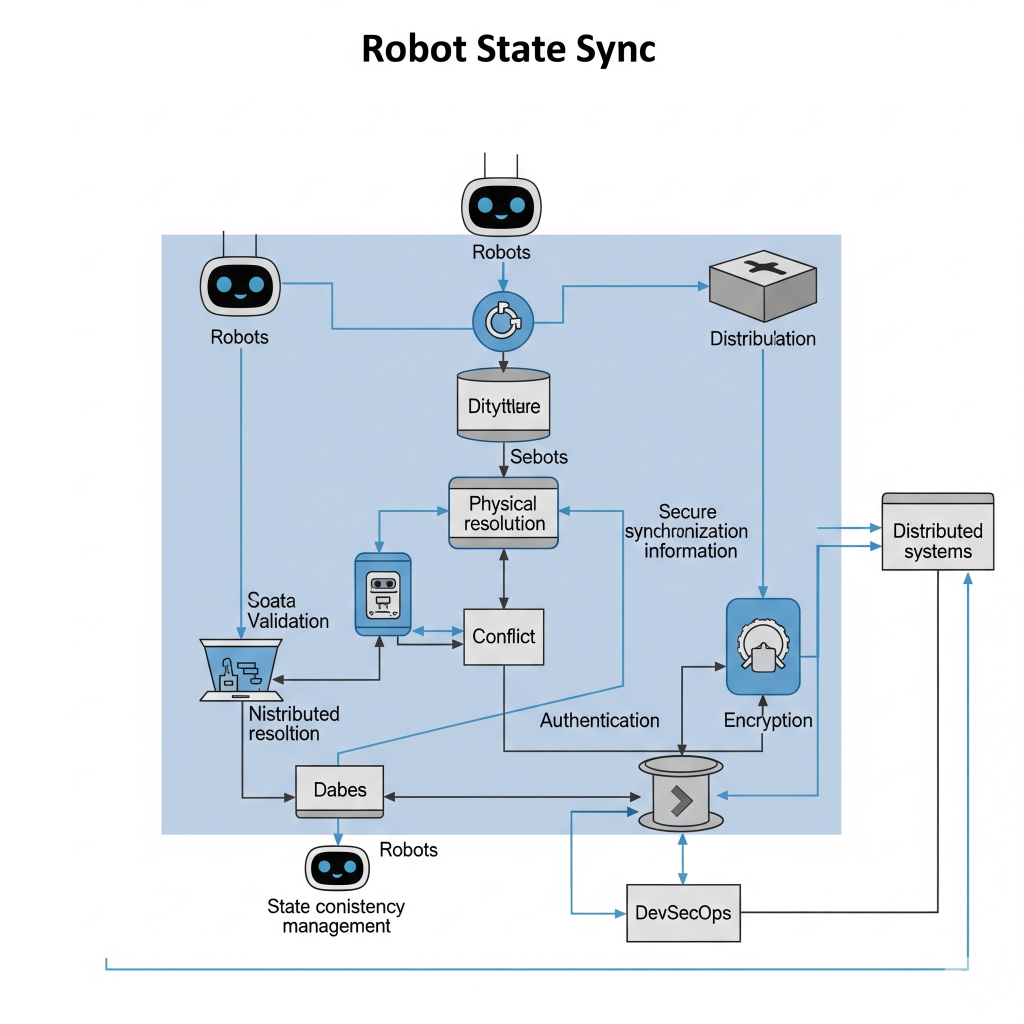
Robot State Sync is a mechanism or tool that ensures real-time synchronization of the state information of robots (physical or software bots) across distributed systems. It enables secure, consistent, and up-to-date state communication across various components in a robotics pipeline or DevSecOps environment.
For instance, in DevSecOps pipelines where robots are used for deployment automation, testing, or security scanning, maintaining a synchronized state (e.g., availability, task status, config changes) across systems is vital.
🧠 History or Background
- Originally emerged in robotics middleware like ROS (Robot Operating System) for keeping robot component states in sync.
- Evolved to support cloud-robotics, IoT integration, and DevSecOps pipelines for secure automation and real-time decision-making.
- Now adopted in security automation, AI-ops, and CI/CD environments where bots play a critical operational role.
🔐 Why is it Relevant in DevSecOps?
In DevSecOps, automated agents or robots are used to:
- Scan code repositories
- Deploy containers
- Monitor compliance
- Test security configurations
Ensuring these bots have a consistent and secure view of the system state is crucial for:
- Preventing misconfigurations
- Coordinating tasks between bots
- Maintaining audit trails
✅ Robot State Sync enables state integrity, security, and compliance automation across dynamic pipelines.
🧩 Core Concepts & Terminology
Key Terms and Definitions
| Term | Definition |
|---|---|
| State Sync | The process of updating and maintaining consistent state data across distributed components |
| Robot Agent | A software-based or physical agent (bot) performing tasks like monitoring, deployment, or testing |
| State Publisher/Subscriber | Messaging design pattern used for broadcasting robot states and receiving updates |
| Middleware | Communication layer (e.g., MQTT, ROS2 DDS) to enable state sync |
| State Drift | Inconsistency between expected and actual robot state across systems |
🔁 How It Fits into the DevSecOps Lifecycle
| DevSecOps Stage | Role of Robot State Sync |
|---|---|
| Plan | Sync test bots’ availability and readiness |
| Develop | Coordinate static/dynamic security checks from multiple bots |
| Build/Test | Sync results from test robots (e.g., DAST, SAST bots) |
| Release/Deploy | Trigger deployments based on robot state readiness |
| Operate/Monitor | Sync operational states and alerting bots |
| Secure | Coordinate threat-hunting and compliance bots across services |
🏗️ Architecture & How It Works
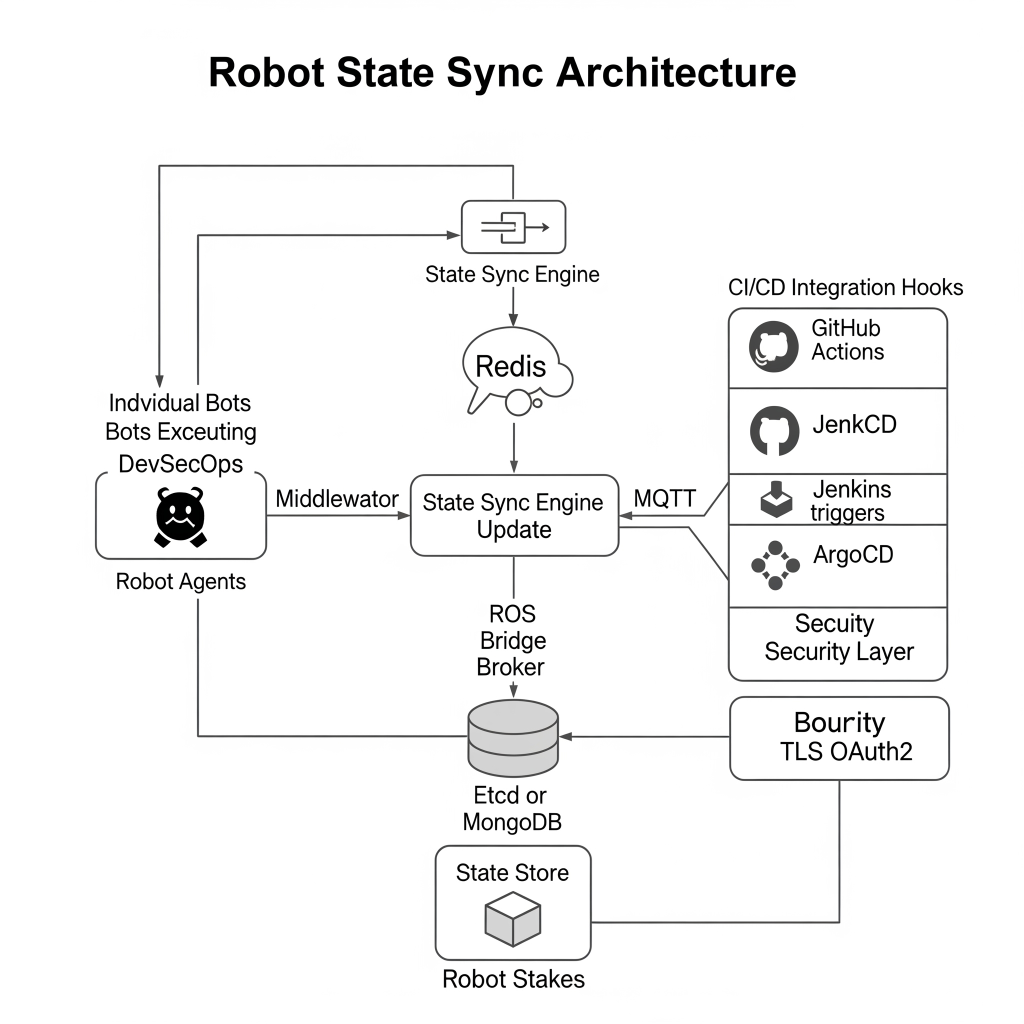
⚙️ Components
- Robot Agents: Individual bots performing DevSecOps tasks
- State Sync Engine: Middleware or orchestrator syncing robot states (e.g., Redis, ROS Bridge, MQTT Broker)
- State Store: Database (e.g., etcd, MongoDB) for persistent state logs
- CI/CD Integration Hooks: GitHub Actions, Jenkins, or ArgoCD triggers
- Security Layer: TLS, OAuth2 for secure communication
🔄 Internal Workflow
- Robots publish their state periodically (
status: idle,task: scan,result: success) - State Sync Engine normalizes and validates the data
- Updates are broadcast to subscribers (dashboards, orchestration tools)
- CI/CD pipelines and security workflows consume state changes and react
🖼️ Architecture Diagram (Descriptive)
+-------------------+     +-----------------------+     +---------------------+
|   Robot Agent A   | --> |   State Sync Engine   | --> |   CI/CD Orchestrator|
+-------------------+     +-----------------------+     +---------------------+
         |                           ↑                           |
         v                           |                           v
+-------------------+     +-----------------------+     +---------------------+
|   Robot Agent B   | --> |   State Store (etcd)  | --> | Monitoring Dashboard|
+-------------------+     +-----------------------+     +---------------------+
🔗 Integration Points
- CI/CD: GitHub Actions, Jenkins pipelines, GitLab runners
- Cloud: AWS IoT Core, Azure IoT Hub, GCP Pub/Sub
- Security: SIEM tools (e.g., Splunk), compliance scanners
- Message Bus: MQTT, ROS DDS, Kafka
🚀 Installation & Getting Started
🧰 Prerequisites
- Python 3.10+
- Docker (for running bots or sync engines)
- Redis or MQTT broker installed
- Git & curl installed
🔧 Step-by-Step Setup Guide
1. Clone the Starter Template
git clone https://github.com/your-org/robot-state-sync-template.git
cd robot-state-sync-template
2. Install Dependencies
pip install -r requirements.txt
3. Start the State Sync Engine
docker-compose up -d mqtt redis
4. Run Robot Agent (simulated)
python agents/security_scanner_bot.py
5. Subscribe to State Updates
python dashboard/state_listener.py
You’ll now see logs like:
{
  "robot_id": "sec-bot-1",
  "status": "scanning",
  "last_check": "2025-06-26T11:12:00Z"
}
🌍 Real-World Use Cases
1. 🔐 Security Automation in DevSecOps
- Sync state of OWASP Zap bots used for DAST across staging and production environments
2. 🚢 Deployment Coordination
- Coordinate robot agents to deploy containers when all pre-check bots are in “ready” state
3. 📊 Compliance Audits
- Sync state of auditing bots that check Kubernetes clusters against CIS benchmarks
4. 🛠️ Disaster Recovery Validation
- Continuously sync state of DR verification bots across AWS regions to ensure readiness
✅ Benefits & Limitations
✔️ Key Advantages
- Real-time visibility into robot activities
- Fault tolerance and recovery support
- Improves coordination in automated DevSecOps flows
- Enables proactive alerting based on robot states
⚠️ Common Challenges
- Complexity in distributed environments
- Synchronization latency over poor networks
- Security risks if state sync is not encrypted
- Version drift between robot agents
🔐 Best Practices & Recommendations
- Use TLS + Auth: Encrypt state sync channels (e.g., MQTT over TLS)
- Audit Logs: Store state transitions for compliance reviews
- Monitoring: Integrate with Grafana or Prometheus for robot state dashboards
- Retry Logic: Implement backoff and retries for failed sync attempts
- Idempotent Updates: Ensure state updates don’t trigger repeated actions
🔄 Comparison with Alternatives
| Feature | Robot State Sync | Webhooks | Centralized Logging |
|---|---|---|---|
| Real-time Sync | ✅ | ⚠️ Delay | ❌ |
| Bidirectional | ✅ | ❌ | ❌ |
| Stateful | ✅ | ❌ | ✅ (but not real-time) |
| Secure Messaging | ✅ (TLS, Auth) | Partial | Depends on setup |
| DevSecOps Fit | High | Medium | Low |
When to use Robot State Sync:
- Multiple agents performing tasks simultaneously
- Need for secure, real-time coordination
- Complex pipelines where order matters
🏁 Conclusion
Robot State Sync plays a critical role in automating, securing, and optimizing DevSecOps pipelines by enabling synchronized, real-time communication between bots, pipelines, and cloud tools.
As DevSecOps grows increasingly autonomous and bot-driven, tools like Robot State Sync will become foundational in ensuring resilience, compliance, and operational security.
