Introduction
Transitioning from a senior engineer to an architect is a defining moment in a professional journey. It requires a shift from focusing on “how things work” to “how things should be designed.” Having mentored many engineers over the last two decades, I have seen that the most successful architects are those who can simplify complex systems while ensuring they remain scalable and secure.
The Certified DevOps Architect (CDA) program is a specialized track designed to help you make this transition. It focuses on the strategic design of delivery platforms rather than just the day-to-day management of tools. In this guide, I will share the depth of knowledge needed to master this role and how this certification can transform your career.
What is Certified DevOps Architect (CDA)?
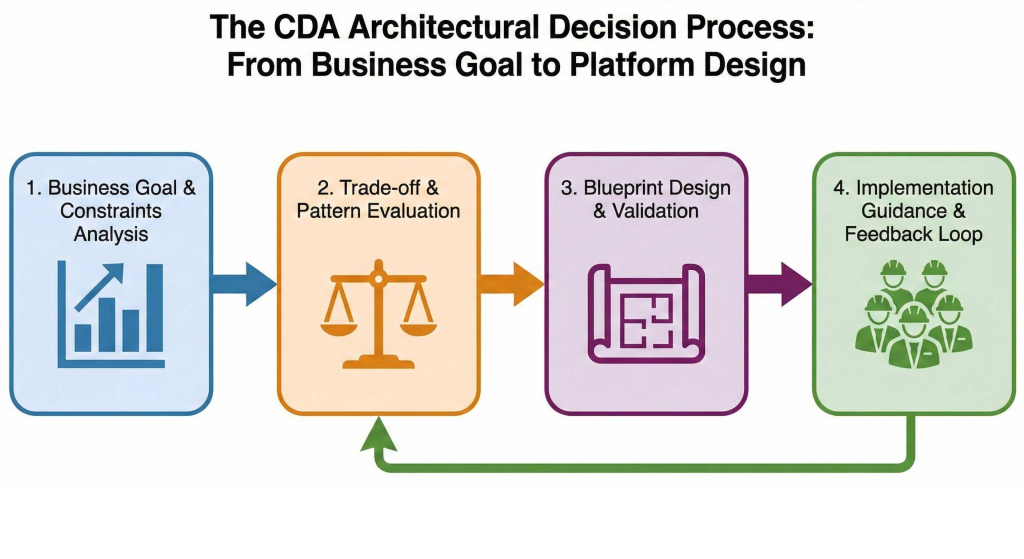
The Certified DevOps Architect (CDA) is an expert-level program that validates your ability to design, govern, and scale modern delivery platforms. Unlike a DevOps engineer who might focus on fixing a specific pipeline or managing a single cluster, an architect looks at the entire organization. You learn to align continuous integration, cloud architecture, security, and observability into a single, healthy blueprint.
Why it matters in today’s software, cloud, and automation ecosystem
The modern software landscape is crowded with thousands of tools and complex cloud services. Without a clear architecture, teams often build “snowflake” environments that are hard to maintain and even harder to scale. A Certified DevOps Architect (CDA) provides the guardrails and standard “golden paths” that allow developers to ship code safely. In an era where business speed is everything, having an architect who can prevent technical debt and outages is invaluable.
Why certifications are important for engineers and managers
For an engineer, a certification like the CDA provides a structured way to fill knowledge gaps in areas like compliance, cost management, and system resilience. For managers, it serves as a benchmark for quality. It ensures that the person leading their technical strategy understands global standards and can justify complex architectural decisions with data and best practices.
2. Certification Overview Table
| Track | Level | Who it’s for | Prerequisites | Skills Covered | Recommended Order |
| DevOps Architecture | Expert | Senior Engineers & Leads | Professional DevOps Knowledge | Platform Design, IaC, Security | After Professional Level |
Provider: DevOpsSchool
Certification Deep-Dive: Certified DevOps Architect (CDA)
What is this certification?
The Certified DevOps Architect (CDA) is a high-level credential for those who want to lead technical transformations. It focuses on designing resilient, scalable, and automated systems that support thousands of deployments without human error.
Who should take this certification?
- Senior Software Engineers moving into technical leadership.
- DevOps & Cloud Engineers wanting to specialize in platform design.
- Engineering Managers who need to oversee complex automation projects.
- Solution Architects looking to integrate DevOps principles into their designs.
Skills you will gain
- Platform Architecture: Designing multi-tier, cloud-native delivery systems.
- Infrastructure as Code (IaC): Mastering Terraform and Ansible for global scale.
- Governance & Compliance: Building automated “gates” to ensure code is safe and legal.
- Resilience Engineering: Implementing high availability and disaster recovery patterns.
- Strategic Leadership: Aligning technical toolchains with actual business goals.
Real-world projects you should be able to do
- Multi-Cloud Disaster Recovery: Build a system that automatically fails over between AWS and Azure.
- Developer Self-Service Portal: Design a platform where developers can provision their own secure environments in minutes.
- Enterprise Security Pipeline: Create a global CI/CD flow with automated secret scanning and vulnerability checks.
- Observability Framework: Design a central dashboard that tracks SLOs and error budgets for hundreds of microservices.
Preparation Plan
7–14 Days Plan
Focus on the core pillars of the CDA curriculum. Review industry whitepapers on cloud-native design and spend time understanding how different tools like Kubernetes, Terraform, and Vault connect to each other.
30 Days Plan
- Week 1-2: Deep dive into architectural patterns and case studies.
- Week 3: Hands-on practice with advanced IaC and monitoring setups.
- Week 4: Take practice exams and refine your ability to design systems on a whiteboard.
60 Days Plan
- Month 1: Master the theoretical foundations of SRE and DevSecOps.
- Month 2: Focus on three major production-style projects. Practice explaining your design choices to a technical committee.
Common mistakes to avoid
- Tool Obsession: Focusing only on how to use a tool rather than why it belongs in the architecture.
- Ignoring Culture: Forgetting that DevOps is about people and communication, not just automation.
- Lack of Scalability: Designing a solution that works for one team but fails when applied to a whole company.
Best next certification after this
- Same track: Master in DevOps Engineering for deeper technical mastery.
- Cross-track: DevSecOps Certified Professional to lead security initiatives.
- Leadership / management: Certified DevOps Manager for those moving into executive roles.
Choose Your Learning Path
1. DevOps Path
Best for engineers who want a holistic view of the entire software lifecycle. It covers everything from code commit to production monitoring.
2. DevSecOps Path
Perfect for those who want to specialize in security. You learn how to integrate security into every step of the automated pipeline.
3. Site Reliability Engineering (SRE) Path
Ideal for professionals focused on scale and uptime. It treats operations as a software problem to be solved with automation.
4. AIOps / MLOps Path
Designed for those working with data science teams. It focuses on automating the lifecycle of AI models and using AI to improve IT operations.
5. DataOps Path
Best for data engineers. It applies DevOps principles to data pipelines to ensure high quality and fast delivery of data.
6. FinOps Path
A must for those managing cloud costs. It bridges the gap between engineering and finance to ensure cloud spending is optimized.
Role → Recommended Certifications Mapping
| Role | Primary Certification | Supporting Certification |
| DevOps Engineer | Certified DevOps Professional | Certified DevOps Architect (CDA) |
| SRE | Certified SRE Practitioner | Certified DevOps Architect (CDA) |
| Platform Engineer | Certified DevOps Architect (CDA) | Kubernetes Expert (CKA) |
| Cloud Engineer | Cloud Solutions Architect | Certified DevOps Architect (CDA) |
| Security Engineer | DevSecOps Professional | Certified DevOps Architect (CDA) |
| Data Engineer | DataOps Specialist | Certified DevOps Architect (CDA) |
| FinOps Practitioner | FinOps Professional | Certified DevOps Architect (CDA) |
| Engineering Manager | Certified DevOps Manager | Certified DevOps Architect (CDA) |
Next Certifications to Take
For the “Specialist” Learner
- Same-track: Pursue the Master in DevOps Engineering to deepen your hands-on skills with over 40+ tools.
- Cross-track: Consider MLOps Certified Professional to prepare for the future of AI-driven delivery.
- Leadership: The Certified DevOps Manager track is the natural next step for those managing people and budgets.
Training & Certification Support Institutions
DevOpsSchool
A global leader in DevOps training, known for its deep technical courses and hands-on labs. They provide lifetime access to materials and a massive community of professionals for the Certified DevOps Architect (CDA) path.
Cotocus
This institution focuses on professional consulting and specialized engineering training. They help teams adopt modern practices through expert-led sessions and real-world project scenarios.
ScmGalaxy
A well-known community hub for software configuration and release management. It offers a huge library of tutorials and forums to help engineers solve complex automation problems.
BestDevOps
Specializes in high-quality, professional-grade training for those looking to master specific cloud and DevOps tools quickly and effectively.
devsecopsschool.com
A dedicated platform for security professionals. They focus on the “Sec” in DevSecOps, providing the tools needed to protect modern software supply chains.
sreschool.com
Everything here is about uptime and reliability. They teach you how to build systems that don’t break, even under the highest loads.
aiopsschool.com
Focuses on the intersection of AI and IT operations. They provide training on how to use machine learning to automate incident response and monitoring.
dataopsschool.com
This school helps data professionals bring the speed of DevOps to the world of data engineering and analytics.
finopsschool.com
The best place to learn about cloud financial management. They teach you how to get the most value out of every dollar spent in the cloud.
FAQs Section
General FAQs
- What is the difficulty level?
It is an expert-level certification meant for experienced professionals. - How much time is required?
Most learners spend 1 to 2 months preparing. - Are there any prerequisites?
A strong understanding of DevOps tools and professional-level experience is expected. - In what sequence should I take certifications?
Usually: Professional → Architect → Manager. - What is the career value?
It qualifies you for senior architect roles which often command top-tier salaries. - Will this help in interviews?
Yes, it provides you with the high-level logic needed to answer architectural questions. - Is it valid globally?
Yes, it is recognized by top organizations worldwide. - Is coding required?
You should be comfortable with scripting and reading code. - Can managers take this?
Yes, it is excellent for managers who want to understand technical strategy. - Is there a lab?
Yes, the training includes extensive hands-on projects. - How is the exam conducted?
It is an online proctored exam. - Do I get community support?
Yes, most programs offer forum or mentor support.
Certified DevOps Architect (CDA) Specific FAQs
- Does it cover multi-cloud?
Yes, designing for multiple clouds is a core topic. - Is the exam scenario-based?
Yes, it tests your ability to make design choices. - Does it include Kubernetes?
Yes, Kubernetes architecture is a major part of the curriculum. - Will I learn about Terraform?
Yes, as a key tool for infrastructure as code. - Is security included?
Yes, building secure architectures is a priority. - Does it focus on cultural change?
Yes, architects are expected to lead cultural transformations. - Is it good for SREs?
Absolutely, it complements the SRE mindset perfectly. - Does it help with cost optimization?
Yes, efficient design leads to lower cloud costs.
Testimonials
DevOps Engineer:
“The Certified DevOps Architect (CDA) helped me think bigger. I no longer just fix pipelines; I design systems that prevent the problems from happening in the first place.”
SRE:
“I gained so much clarity on how to build for reliability. The architecture patterns I learned here are used in my work every single day.”
Cloud Engineer:
“Moving from an engineer to an architect felt hard until I had this roadmap. It gave me the technical confidence to lead my team.”
Security Engineer:
“I finally learned how to make security a part of the design, not an obstacle. This certification has made my role so much more effective.”
Engineering Manager:
“The CDA program helped me understand the ‘why’ behind our technical choices. Now I can better support my team and our business goals.”
Conclusion
Earning the Certified DevOps Architect (CDA) certification is a powerful way to future-proof your career. It shows that you have moved beyond being a “tool user” and have become a “system designer.” In a world that values speed and reliability, an architect who can deliver both is the most valuable asset any company can have. Focus on building a deep understanding of architecture, plan your learning journey, and stay consistent. The path to becoming an architect is challenging, but the career rewards are well worth the effort.
